
Actinolite is a calcium-rich amphibole mineral belonging to the inosilicate subclass of silicate minerals. It is composed primarily of calcium, magnesium, iron, silicon, oxygen, and hydroxyl groups, with its chemical composition varying according to the relative proportions of magnesium and ferrous iron. Its idealized chemical formula is Ca₂(Mg,Fe²⁺)₅Si₈O₂₂(OH)₂. Actinolite is an intermediate member of the tremolite–actinolite–ferro-actinolite compositional series, in which magnesium is progressively replaced by iron. It commonly occurs in shades of green, including pale green, grey-green, dark green, and nearly black, with its coloration largely influenced by iron content and other minor chemical substitutions.
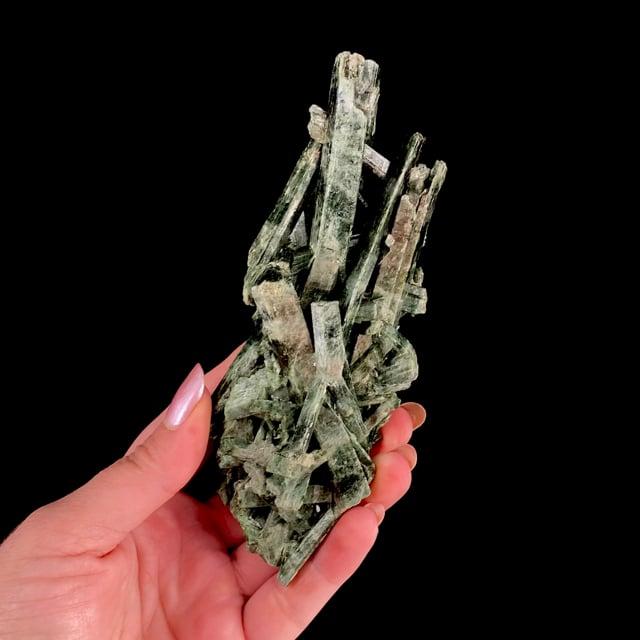
Actinolite typically develops elongated prismatic, bladed, fibrous, or radiating crystal forms. Its crystals belong to the monoclinic crystal system and commonly display two prominent cleavage directions that intersect at angles of approximately 56° and 124°, a characteristic feature of amphibole minerals. It is most frequently associated with metamorphic environments, particularly rocks that have undergone changes in temperature, pressure, and fluid composition. Actinolite is an important mineral in the study of metamorphic rocks because its presence and chemical composition can provide information about the conditions under which a rock formed or was altered. It also occurs as a constituent of certain metamorphic rocks, including greenschists and some varieties of amphibolite, and may be found in association with minerals such as chlorite, epidote, albite, quartz, and calcite.
Although actinolite is sometimes encountered in mineral collections and occasionally used as a gemstone material, its significance is primarily geological and mineralogical. Some specimens develop fine fibrous or asbestiform structures, which require particular attention because inhalation of airborne fibers can present serious health hazards. Consequently, actinolite is not simply classified by its chemical composition and external appearance; its crystal habit and physical condition are also important when evaluating individual specimens.
History and Naming of Actinolite
The name Actinolite was introduced by Irish mineralogist Richard Kirwan in 1794. It is derived from the Greek words aktis, meaning “ray” or “beam,” and lithos, meaning “stone.” The name refers to the characteristic radiating arrangement of the mineral’s elongated crystals, which can form groups of slender crystals extending outward from a common center. This radial habit was particularly noticeable in some of the specimens described during the early development of mineralogical classification.
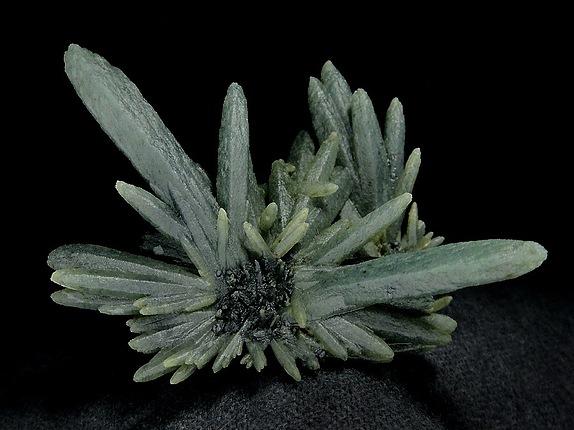
Actinolite was recognized and studied during a period when mineralogists were increasingly distinguishing minerals according to their external characteristics, chemical composition, and physical properties. Early descriptions often relied heavily on crystal shape, color, cleavage, and the appearance of mineral aggregates. As chemical analysis and crystallographic methods became more advanced, researchers established that actinolite belongs to a broader group of amphibole minerals with closely related compositions and structures.
The mineral was subsequently understood as part of a compositional series extending between tremolite and ferro-actinolite. These minerals share a similar amphibole crystal structure but differ in the relative proportions of magnesium and iron. The development of more systematic amphibole nomenclature helped clarify the relationship between these mineral species and provided a chemical basis for their classification. Under modern amphibole nomenclature, the name actinolite is retained for an established compositional range because of its long-standing use in geological and petrological literature.
Chemical Composition of Actinolite
Actinolite is a hydrated calcium magnesium iron silicate with a general chemical formula of Ca₂(Mg,Fe²⁺)₅Si₈O₂₂(OH)₂. Its composition is not fixed at a single ratio because magnesium and ferrous iron can substitute for one another within the mineral’s crystal structure. In the actinolite compositional range, magnesium and iron are both significant constituents, and their relative proportions determine where an individual sample falls within the tremolite–actinolite–ferro-actinolite series.
Calcium occupies relatively consistent structural positions, while magnesium and iron primarily occupy the octahedral sites within the amphibole structure. Silicon and oxygen form the silicate framework, and hydroxyl groups are incorporated into the structure as part of the mineral’s chemical composition. Minor amounts of other elements, including aluminum, manganese, sodium, chromium, and titanium, may also occur through chemical substitution. The exact composition depends on the chemistry of the original rock, the temperature and pressure conditions during metamorphism, and the composition of fluids involved in mineral-forming reactions.
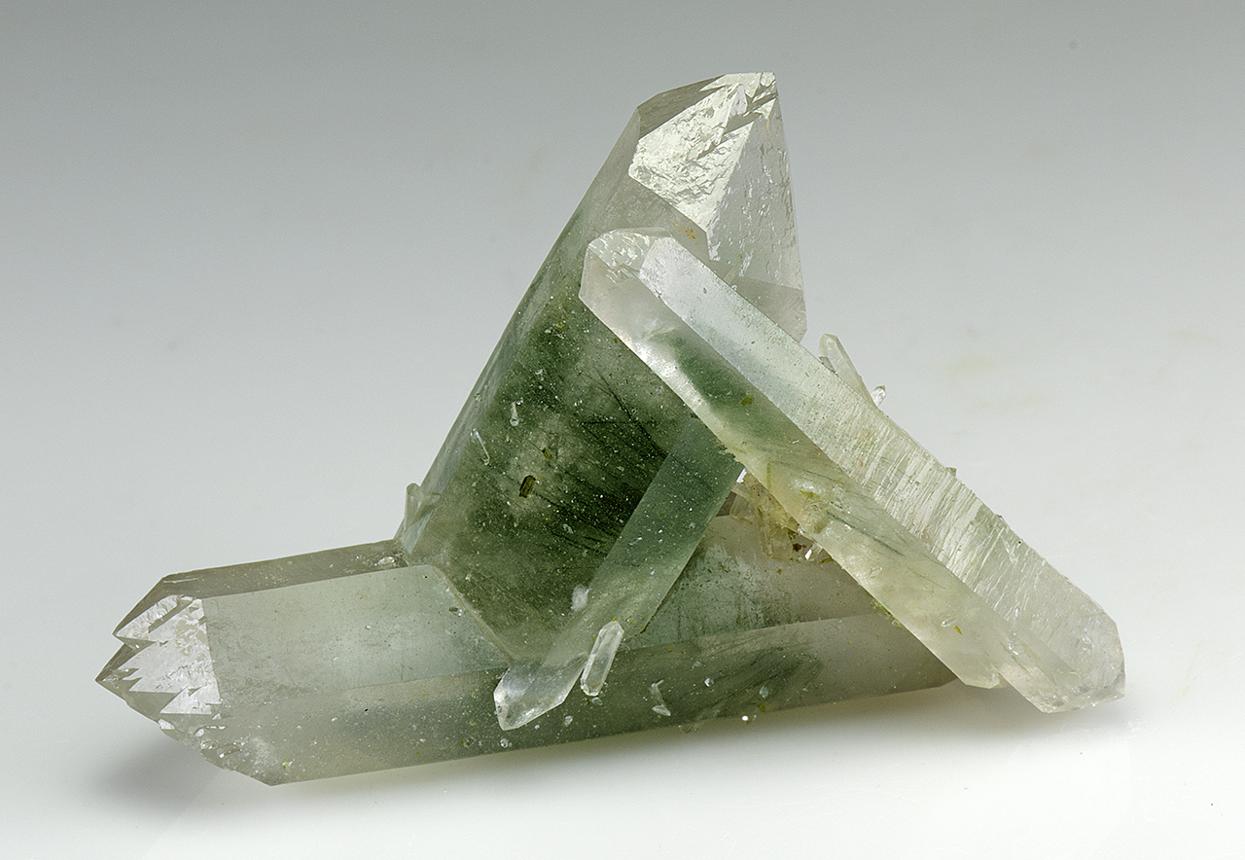
Iron content has a particularly noticeable influence on the physical and optical characteristics of actinolite. Samples with relatively higher iron concentrations commonly exhibit darker green colors, stronger pleochroism, and somewhat higher density. Magnesium-rich compositions tend toward the characteristics of tremolite, whereas iron-rich compositions approach ferro-actinolite. Chemical analysis is therefore necessary when precise identification and classification are required, especially for samples whose compositions lie close to the boundaries between these related amphibole minerals.
Crystal Structure of Actinolite
Actinolite crystallizes in the monoclinic crystal system and belongs to the amphibole supergroup. Its crystal structure is characterized by double chains of linked silicon-oxygen tetrahedra, a structural arrangement that distinguishes amphiboles from single-chain inosilicates such as pyroxenes. Each silicon atom is surrounded by four oxygen atoms, forming a tetrahedral unit. These tetrahedra share oxygen atoms to create continuous double chains extending parallel to the crystallographic c-axis. The chains are connected by additional metal-bearing structural units containing calcium, magnesium, and iron.
The double-chain arrangement produces a relatively elongated crystal structure and influences the mineral’s characteristic cleavage. Actinolite has two prominent cleavage directions parallel to the amphibole cleavage planes, commonly intersecting at approximately 56° and 124° when viewed perpendicular to the length of the crystals. This angular relationship is useful in distinguishing amphiboles from pyroxenes, which generally exhibit cleavage directions closer to 90°. The structure also accounts for the tendency of actinolite to develop elongated prismatic, bladed, and fibrous crystals.
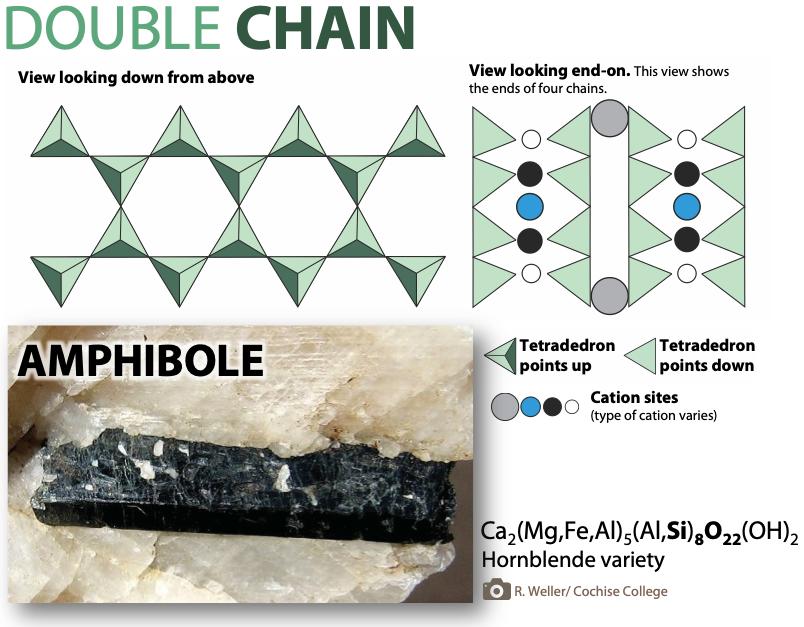
The monoclinic structure commonly produces crystals with an elongated appearance, although individual specimens may show variations in crystal proportions, termination, and aggregation. Twinning can occur, including simple and lamellar forms. Differences in chemical composition, particularly the substitution of iron for magnesium, can produce measurable variations in unit-cell dimensions and optical properties without fundamentally changing the mineral’s structural arrangement.
Physical and Chemical Properties of Actinolite
Actinolite has a Mohs hardness of approximately 5 to 6, placing it between apatite and orthoclase on the standard hardness scale. Its specific gravity generally ranges from approximately 3.03 to 3.24, although the exact value varies with chemical composition, particularly iron content. The mineral commonly displays a vitreous to silky luster, with fibrous aggregates sometimes producing a more pronounced silky appearance. Its streak is generally white or pale in color, while its transparency ranges from transparent to translucent and opaque depending on crystal thickness, inclusions, and aggregate structure.
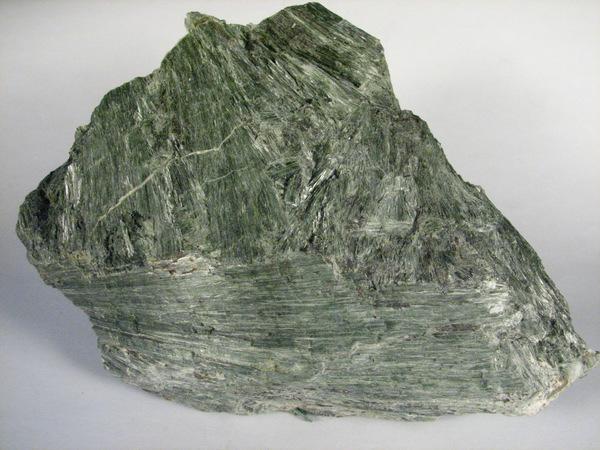
The mineral has two distinct cleavage directions characteristic of the amphibole group, and its fracture may be uneven, splintery, or irregular. Well-developed crystals are commonly elongated and may exhibit longitudinal striations parallel to their length. Some crystals are relatively straight and prismatic, whereas others are bent, kinked, or arranged in radiating clusters. Fibrous specimens may consist of numerous extremely slender crystals that are difficult to distinguish individually without magnification.
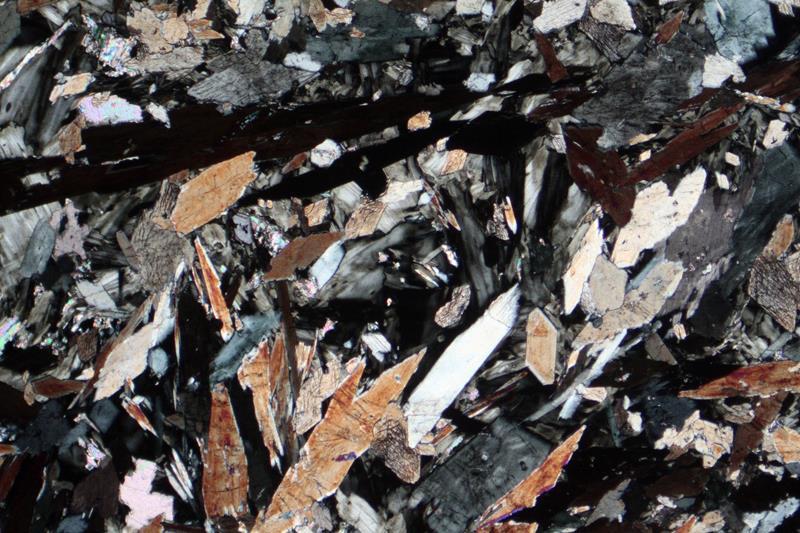
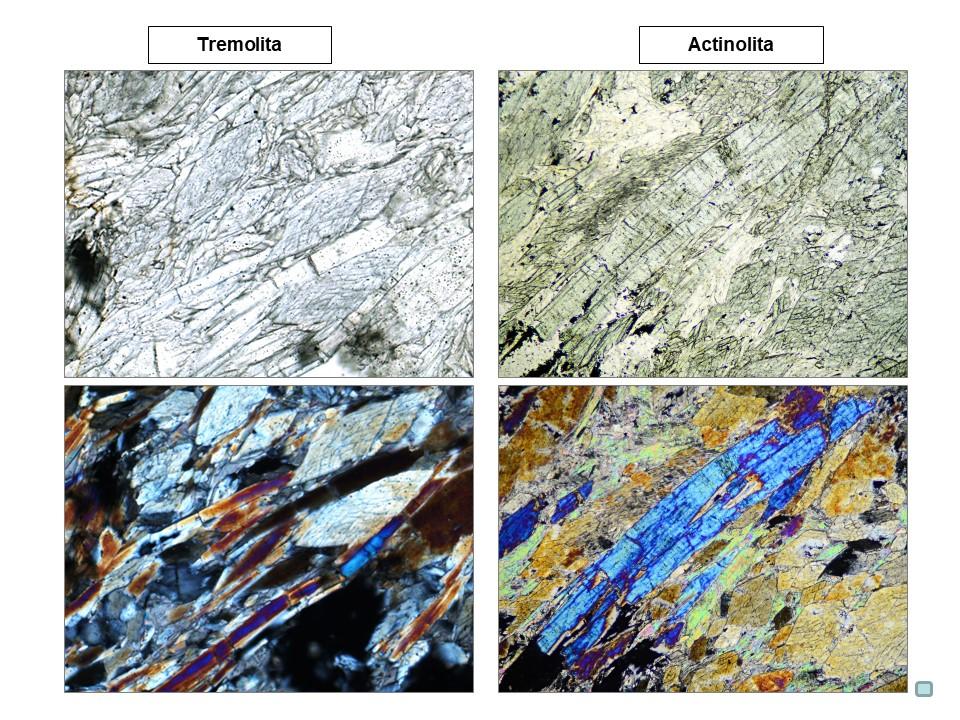
Optically, actinolite is typically biaxial negative, although optical properties vary according to its chemical composition. Its refractive indices are generally within the approximate range of 1.60 to 1.70, and its birefringence is commonly moderate. Pleochroism is frequently observed in transparent or thin-section specimens, with different crystallographic directions displaying different shades of green, yellow-green, or brownish green. The intensity of pleochroism generally increases with higher iron content. Under a polarizing microscope, actinolite can be distinguished through its optical orientation, extinction behavior, refractive indices, and characteristic amphibole cleavage.
Chemically, actinolite is a hydroxyl-bearing silicate that is relatively stable under the metamorphic conditions in which it forms. Its composition and stability are influenced by temperature, pressure, water availability, and the chemical environment of the surrounding rocks. During subsequent metamorphism or hydrothermal alteration, it may be replaced by other minerals or participate in reactions that produce different amphibole, chlorite, epidote, and pyroxene assemblages.
Color and Appearance of Actinolite
Actinolite is most commonly green, but its color can vary considerably according to iron concentration, minor chemical substitutions, crystal thickness, and the presence of associated minerals. Typical colors include pale green, grey-green, medium green, dark green, and greenish black. Some specimens appear almost black when viewed as thick aggregates, while thin crystals may show lighter green or yellow-green tones. Chromium-bearing material can develop a more intense emerald-green appearance, although such coloration is associated with particular chemical compositions rather than being characteristic of all actinolite.
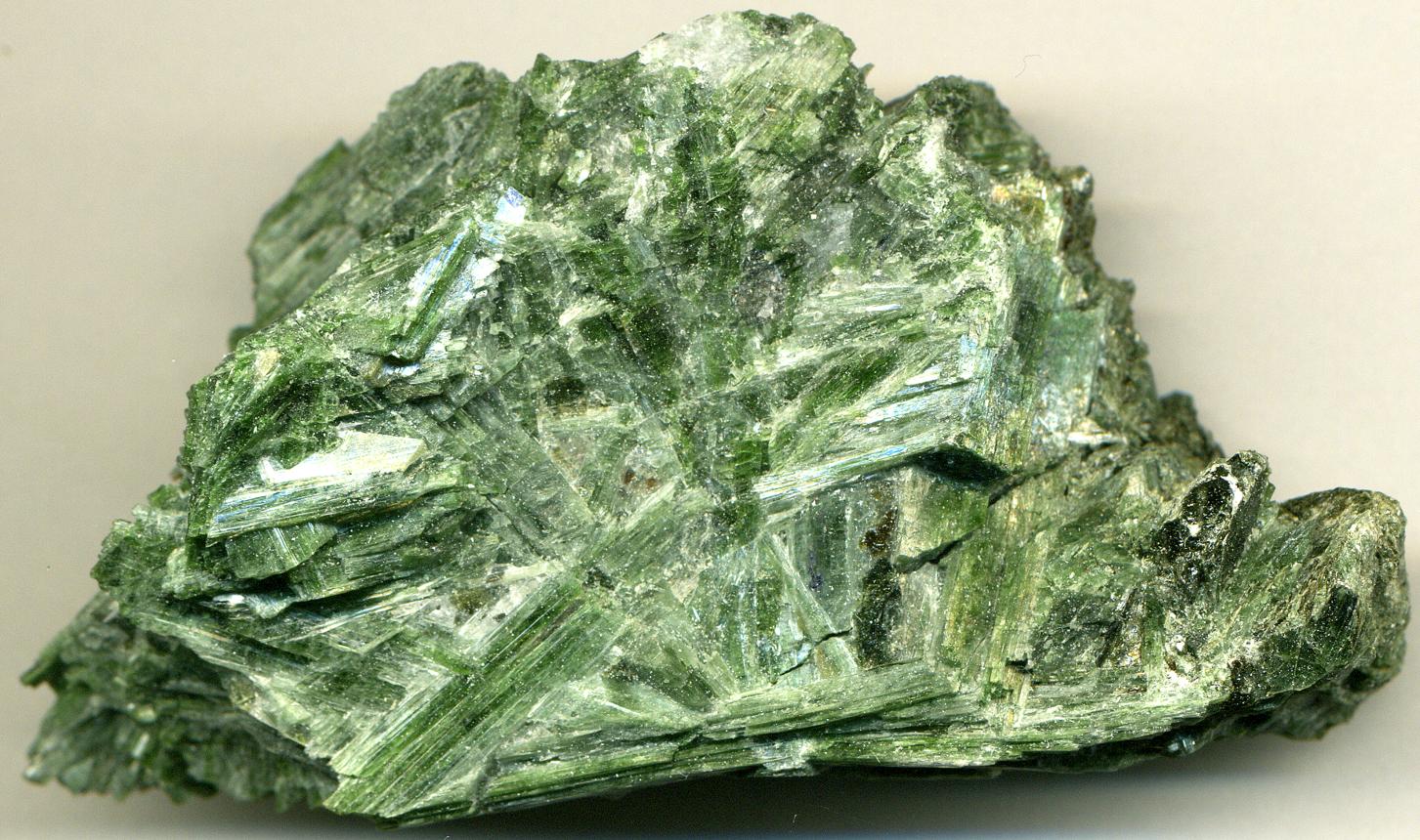
The external appearance of actinolite is strongly influenced by its crystal habit. Individual crystals may form elongated prisms with distinct longitudinal striations, while aggregates can develop radiating, columnar, bladed, or fibrous structures. Radiating specimens consist of crystals extending outward from a central point or region, sometimes producing fan-shaped or rosette-like arrangements. In other specimens, crystals occur in dense interlocking masses or as slender inclusions within quartz and other host minerals.
Luster also varies with crystal form. Well-developed prismatic crystals commonly display a vitreous luster, whereas fine-grained fibrous aggregates may have a silky or slightly satiny appearance. Transparency is more commonly observed in relatively thin individual crystals, while compact masses are usually translucent to opaque. The combination of green coloration, elongated crystal habit, and characteristic cleavage provides useful preliminary clues for identifying actinolite, although these features alone are insufficient to establish a definitive mineral identification.
Formation and Geological Occurrence of Actinolite
Actinolite primarily forms through metamorphic processes involving calcium-, magnesium-, and iron-bearing rocks. It is particularly characteristic of low- to medium-grade metamorphic environments, where changes in temperature, pressure, and fluid composition promote reactions between pre-existing minerals. Regional metamorphism of mafic igneous rocks, such as basalt and gabbro, is one of the most common geological settings in which actinolite develops. Under suitable conditions, original pyroxene and other ferromagnesian minerals may react with water-bearing fluids and surrounding silicate minerals to produce actinolite.
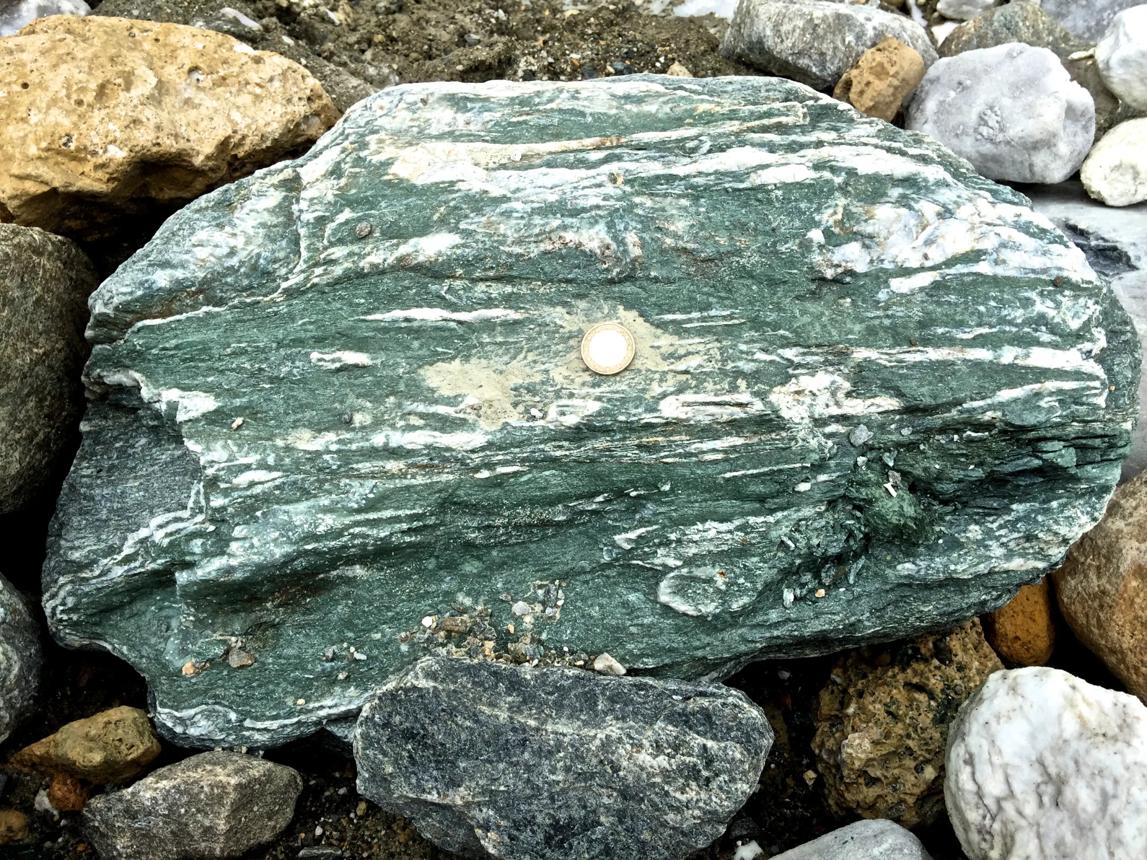
In greenschist-facies metamorphism, actinolite commonly occurs together with chlorite, epidote, albite, quartz, and other minerals. These assemblages develop as mafic rocks undergo hydration and recrystallization at relatively low metamorphic grades. Actinolite may replace original pyroxene crystals, form new elongated crystals within the rock matrix, or develop along fractures and mineral boundaries. Its presence is particularly useful in recognizing greenschist-facies mineral assemblages and understanding the metamorphic evolution of altered volcanic and intrusive rocks.
Actinolite also occurs in metamorphosed carbonate rocks, including impure limestone and dolomite. When carbonate rocks contain suitable amounts of magnesium, iron, calcium, and silica, metamorphic reactions can produce actinolite and other calcium-bearing silicate minerals. These reactions may take place during regional metamorphism or near igneous intrusions where contact metamorphism modifies the surrounding carbonate rocks. Depending on the original composition and metamorphic conditions, associated minerals may include diopside, tremolite, calcite, quartz, epidote, and garnet.
Hydrothermal alteration provides another environment for actinolite formation. Hot, chemically active fluids can circulate through fractures and permeable zones within igneous rocks, introducing or redistributing water and dissolved elements. These fluids may transform primary minerals into secondary amphiboles, including actinolite. Such alteration is particularly relevant in mafic and ultramafic rocks, where actinolite may occur as a replacement product of pyroxene or as part of a broader alteration assemblage.
The formation of actinolite is controlled by several interacting factors rather than by a single temperature or pressure condition. The availability of calcium, magnesium, iron, silica, and water determines whether the mineral can develop, while temperature, pressure, and oxygen fugacity influence its chemical composition and stability. Consequently, actinolite-bearing rocks from different geological environments may have noticeably different mineral associations and chemical characteristics.
Types and Varieties of Actinolite
Actinolite occurs in several recognizable forms based on crystal habit, chemical composition, and distinctive physical characteristics. Some traditional variety names describe particular appearances or compositional features rather than formally recognized independent mineral species.
Strahlstein: Strahlstein is a traditional name used for actinolite specimens that develop elongated crystals in radiating arrangements. The crystals extend outward from a central point or common base, producing fan-shaped, star-like, or rosette-like aggregates. This habit is closely related to the origin of the mineral’s name and is one of its recognizable morphological forms. Strahlstein may occur in metamorphic rocks and mineral veins, with individual crystals ranging from relatively slender blades to more substantial prismatic forms.
Smaragdite: Smaragdite is a traditional name for a bright green, chromium-bearing amphibole material associated with the actinolite–tremolite compositional range. Its intense green coloration is related to chromium substitution within the mineral structure. The term has historically been applied somewhat inconsistently, and some material described as smaragdite is more accurately classified as chromium-bearing tremolite or actinolite according to its measured chemical composition. It is therefore useful to distinguish the traditional variety name from a formal mineral species designation.
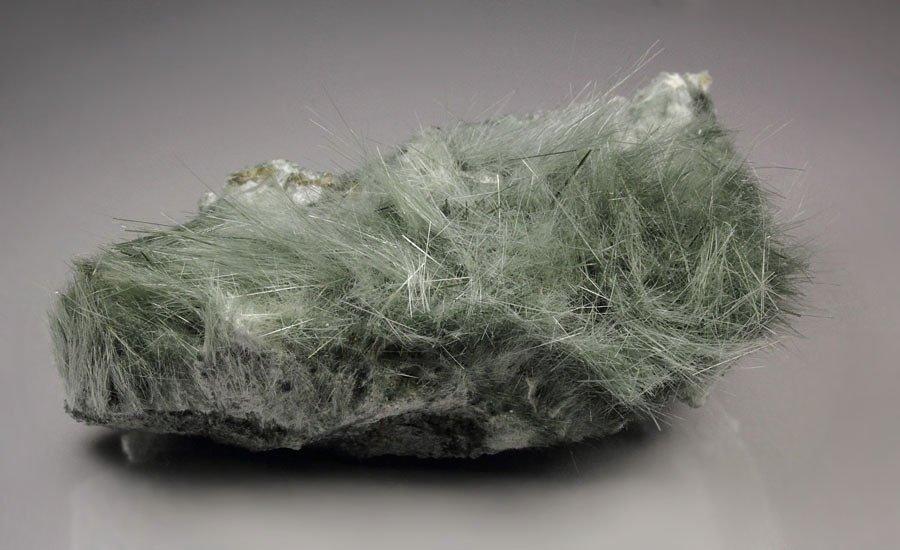
Byssolite: Byssolite is a traditional name associated with fine, slender, hair-like or fibrous actinolite aggregates. It commonly develops as delicate bundles of elongated crystals, sometimes occurring in narrow veins or as coatings and inclusions in other minerals. Its fibrous appearance distinguishes it from the more compact prismatic forms of actinolite. The term has also been used historically for similar fibrous amphibole material, so precise mineral identification may require chemical and structural analysis.
Fibrous Actinolite: Fibrous actinolite describes material in which the mineral develops as closely packed, slender fibers rather than clearly separated prismatic crystals. These fibers may occur in parallel bundles, irregular masses, or interwoven aggregates. Depending on their dimensions and structural arrangement, some fibrous actinolite specimens may exhibit asbestiform characteristics. This distinction is important because asbestiform actinolite can release respirable fibers when disturbed and should not be treated as ordinary decorative mineral material.
Major Occurrences and Localities of Actinolite
Actinolite is distributed across many metamorphic terrains worldwide and is particularly common in regions containing metamorphosed mafic rocks, altered ultramafic bodies, and metamorphosed carbonate formations. Its occurrence is frequently associated with regional metamorphic belts, ophiolite complexes, and contact metamorphic zones. The mineral may appear as microscopic crystals within rock-forming assemblages or as larger specimens in veins, fractures, and mineral-rich cavities.
In Europe, actinolite has been reported from numerous Alpine and other metamorphic regions. Switzerland is a notable source of actinolite-bearing rocks, particularly in the Alps, where regional metamorphism has affected a wide range of mafic and ultramafic formations. Austria also contains actinolite occurrences associated with metamorphic rocks in the Alpine region. In the United Kingdom, Wales has documented occurrences in altered basic igneous rocks and metamorphic formations, including Snowdonia and Anglesey. Some Welsh specimens occur as fibrous material in veins associated with calcite.
In North America, actinolite occurs in several metamorphic provinces and mineral localities. The United States contains numerous occurrences in regions such as Vermont, California, Washington, and New York. It is commonly associated with metamorphosed basaltic rocks, serpentinite-related environments, and contact metamorphic deposits. In Canada, actinolite occurs in several Precambrian geological terrains and metamorphic belts, where it may be associated with chlorite, epidote, quartz, and other amphibole minerals.
In Asia, actinolite has been documented in China, Russia, and other regions containing extensive metamorphic formations. Occurrences in China include areas within the Kunlun Mountains and other mountain belts where regional metamorphism and tectonic deformation have affected mafic and ultramafic rocks. Russia has numerous reported occurrences in the Ural Mountains and other geological provinces. The mineral may also be encountered in metamorphic complexes associated with ancient continental crust and altered igneous formations.
In Africa, actinolite occurs in various metamorphic and mineralized regions, including parts of Tanzania and other areas with suitable mafic and ultramafic geological environments. Chromium-bearing green amphibole material has also been reported from African localities. In other parts of the world, including Australia and South America, actinolite is found in metamorphic rocks and hydrothermally altered geological formations.
The appearance and quality of actinolite specimens vary significantly between localities. Some deposits produce well-developed prismatic crystals, while others contain predominantly fine-grained or fibrous aggregates. Geological setting, host-rock composition, metamorphic history, and subsequent alteration all influence the characteristics of individual occurrences.
Uses and Applications of Actinolite
Actinolite has several applications and areas of importance in mineralogy, petrology, geological research, and mineral collecting. Its most significant role is as an indicator mineral in metamorphic geology. Because it commonly forms under particular temperature, pressure, and chemical conditions, its presence can help geologists interpret the metamorphic history of rocks. Actinolite-bearing mineral assemblages are especially useful in identifying greenschist-facies metamorphism and studying the alteration of mafic igneous rocks.
In petrological research, actinolite is examined to understand mineral reactions, chemical substitutions, and the evolution of metamorphic systems. Its magnesium-to-iron ratio can provide information about the chemical environment in which it formed. Researchers may analyze actinolite using electron microprobe analysis, X-ray diffraction, Raman spectroscopy, and optical microscopy to determine its composition, crystal structure, and relationship with associated minerals. These investigations are useful for reconstructing metamorphic conditions and studying fluid-rock interactions.
Actinolite is also collected as a mineral specimen. Well-developed green prismatic crystals, radiating aggregates, and unusual fibrous or bladed forms may be preserved in geological collections and museums. Specimens are commonly studied for their crystal habits, mineral associations, and compositional variations. However, fibrous or potentially asbestiform material requires appropriate safety precautions, and handling or displaying such specimens should be evaluated according to their condition and potential for fiber release.
Some compact, non-fibrous actinolite material has also been used as ornamental or lapidary material. Its green coloration and mineralogical relationship with tremolite make certain specimens of interest to collectors and stoneworkers. Nevertheless, actinolite is not widely used in conventional jewelry because of its moderate hardness, pronounced cleavage, and tendency to form elongated or fibrous crystals. It is also important to distinguish actinolite from nephrite, a variety of jade that is composed primarily of interlocking tremolite–actinolite-series amphibole fibers. Although actinolite-related amphiboles can occur in nephrite, ordinary actinolite should not automatically be classified as jade.
Historically, fibrous varieties of actinolite have also been associated with asbestos materials. Asbestiform actinolite has been used in certain industrial applications because of its resistance to heat and chemical degradation. However, these uses are associated with serious occupational and environmental health concerns. Actinolite is therefore primarily regarded as a mineralogical and geological material rather than a mineral with broad modern commercial applications.
How to Identify Actinolite
Actinolite can be initially recognized through its characteristic green coloration, elongated crystal habit, amphibole cleavage, and association with metamorphic rocks. Individual crystals commonly appear as slender prisms or bladed forms, while aggregates may develop radiating, columnar, or fibrous structures. Its color ranges from pale green to dark green and nearly black, depending largely on iron content. A vitreous luster is typical of well-formed crystals, whereas fibrous specimens may display a silky appearance.
Hardness and cleavage provide additional identification characteristics. Actinolite has a Mohs hardness of approximately 5 to 6 and exhibits two prominent cleavage directions intersecting at angles of about 56° and 124°. These cleavage angles are particularly useful when comparing actinolite with pyroxene minerals, which generally have cleavage directions closer to 90°. Its specific gravity is usually between 3.03 and 3.24, although measurements can vary with composition.
In geological specimens, the surrounding mineral assemblage can provide important identification clues. Actinolite frequently occurs with chlorite, epidote, albite, quartz, calcite, and other metamorphic minerals. Its presence in greenschist or altered mafic rocks is particularly characteristic. In thin sections, actinolite commonly displays green pleochroism, moderate birefringence, and optical properties consistent with monoclinic amphiboles.
However, visual identification alone may not reliably distinguish actinolite from closely related minerals. Tremolite and ferro-actinolite have similar crystal structures and physical characteristics, with their classification depending primarily on magnesium and iron proportions. Hornblende and other calcium amphiboles may also resemble actinolite in hand specimens. For more precise identification, mineralogists use optical microscopy, X-ray diffraction, and chemical analysis, particularly electron microprobe analysis, to establish the mineral’s composition and structural characteristics.
When examining potentially fibrous specimens, identification should not involve breaking, grinding, scratching, or otherwise disturbing the material. Asbestiform actinolite can release airborne fibers, and its identification should be conducted using appropriate laboratory procedures and safety controls.
Actinolite and Similar Minerals
Actinolite can be confused with several other silicate minerals, particularly amphiboles and pyroxenes that share similar colors, crystal habits, and geological environments. Although these minerals may look alike in hand specimens, differences in chemical composition, cleavage, crystal structure, and optical properties help distinguish them.
| Mineral | Chemical Formula | Main Differences |
|---|---|---|
| Tremolite | Ca₂Mg₅Si₈O₂₂(OH)₂ | Magnesium-rich end member of the tremolite–actinolite series; generally lighter in color. |
| Ferro-actinolite | Ca₂Fe²⁺₅Si₈O₂₂(OH)₂ | Iron-rich end member; commonly darker and denser than actinolite. |
| Hornblende | Complex calcium-bearing amphibole formula | Compositionally more variable and commonly contains significant aluminum and other elements. |
| Glaucophane | Na₂Mg₃Al₂Si₈O₂₂(OH)₂ | Typically blue to blue-violet and characteristic of high-pressure, low-temperature metamorphic environments. |
| Augite | (Ca,Na)(Mg,Fe,Al,Ti)(Si,Al)₂O₆ | A pyroxene with cleavage directions near 90°, rather than the characteristic amphibole cleavage angles. |
| Diopside | CaMgSi₂O₆ | Usually forms shorter prismatic crystals and belongs to the pyroxene group. |
The closest compositional relatives of actinolite are tremolite and ferro-actinolite. These three minerals form a continuous compositional relationship involving progressive substitution of magnesium by iron. Their external appearances can overlap considerably, making chemical analysis particularly important for distinguishing samples near compositional boundaries. Hornblende may also resemble actinolite, especially in dark green or black specimens, but its more complex chemical composition and optical characteristics can help separate the two.
Differences in cleavage provide a useful distinction between amphiboles and pyroxenes such as augite and diopside. Amphiboles generally display two cleavage directions intersecting at approximately 56° and 124°, while pyroxenes have cleavage angles close to 90°. This difference is particularly useful in petrographic examination, where the mineral’s internal structure and optical behavior can be studied under a polarizing microscope.
Safety and Handling Considerations
Actinolite requires particular attention because some forms occur as asbestos. Not every actinolite specimen is asbestos, and compact, non-fibrous crystals are not automatically classified as asbestos materials. The distinction depends on the mineral’s fibrous crystal habit and structural characteristics rather than chemical composition alone.
Asbestiform actinolite consists of thin, separable fibers that can become airborne when the material is damaged, crushed, cut, or disturbed. Inhalation of these fibers is associated with serious respiratory diseases, including asbestosis, lung cancer, and mesothelioma. Amphibole asbestos fibers are particularly persistent in the respiratory system. Consequently, specimens suspected of containing asbestiform actinolite should not be cut, polished, ground, or handled in ways that could generate airborne dust.
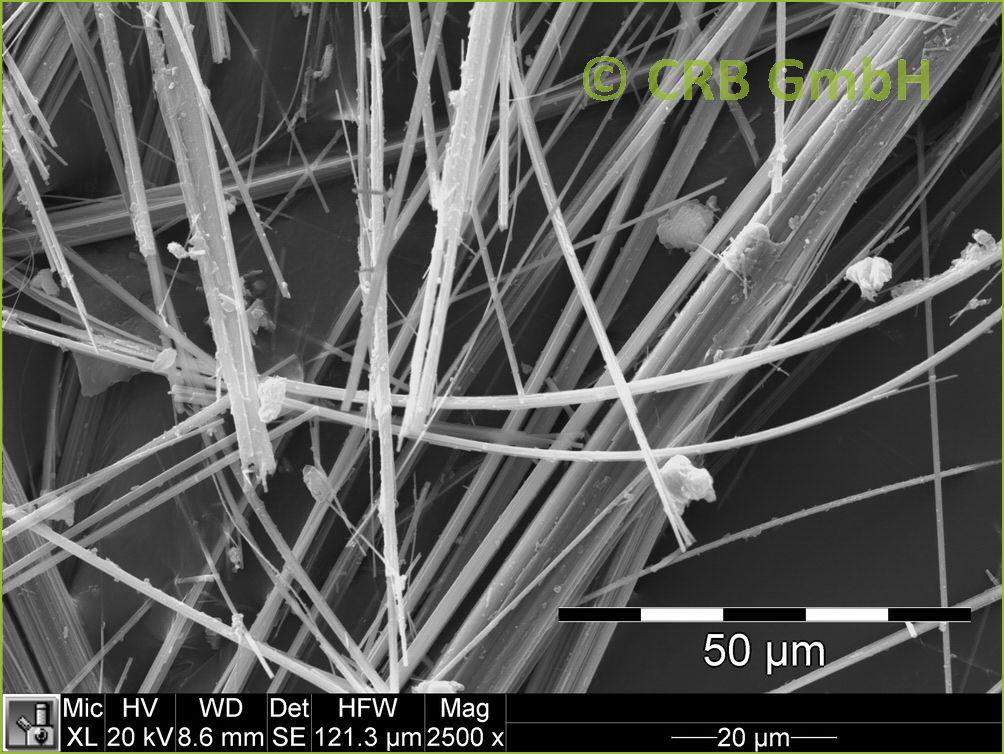
For mineral collections, the physical condition of a specimen should be considered before deciding how to store or display it. Potentially fibrous material should not be cleaned using compressed air, dry brushing, or other methods that may release fibers. Where asbestos identification is uncertain, professional laboratory analysis and appropriate handling procedures are preferable to visual assessment.