
Hercynite is an iron-rich member of the spinel mineral group with the chemical formula FeAl₂O₄. It is an oxide mineral composed primarily of iron and aluminum, typically occurring in metamorphic rocks, especially those formed under high-temperature conditions. Hercynite commonly develops in aluminum-rich, silica-poor geological environments, where it may form through reactions involving iron-bearing and aluminum-bearing minerals during metamorphism.
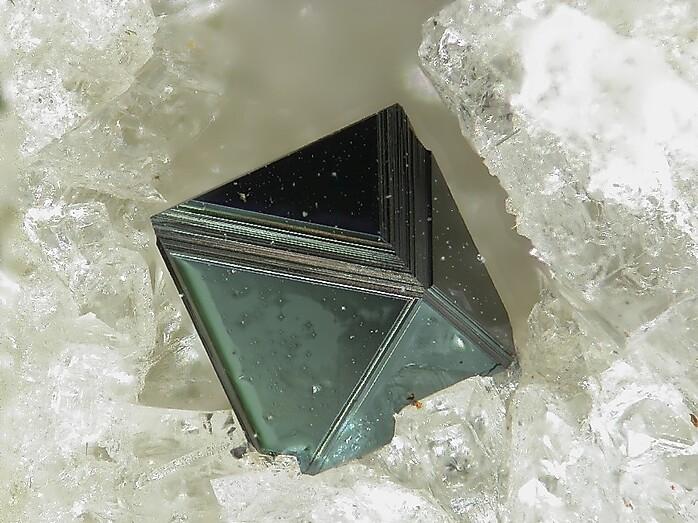
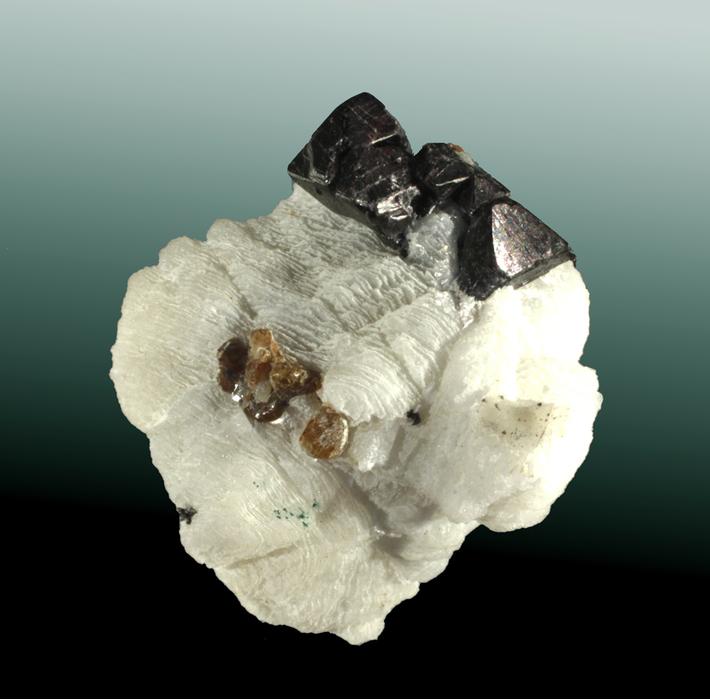
The mineral typically occurs as dark green, greenish-black, brownish-black, or nearly black crystals, although its color can vary depending on chemical composition, impurities, and structural characteristics. It commonly crystallizes in the cubic system and may form well-developed octahedral crystals, granular aggregates, or disseminated grains within its host rocks. Hercynite is particularly associated with high-temperature metamorphic environments, including contact metamorphic zones and granulite-facies rocks, where its presence can provide useful information about the chemical conditions and thermal history of the surrounding geological formations.
Hercynite belongs to the spinel supergroup and forms compositional relationships with several other spinel minerals, including spinel (MgAl₂O₄), gahnite (ZnAl₂O₄), and chromite (FeCr₂O₄). The relative proportions of iron, magnesium, zinc, and other substituting elements can influence its physical and optical properties. Unlike gem-quality magnesium-rich spinel, natural hercynite is more commonly encountered as a mineralogical component of rocks and mineral assemblages rather than as a regularly cut gemstone. Its geological significance is closely related to the conditions under which iron and aluminum oxides crystallize and remain stable.
History and Discovery of Hercynite
Hercynite was first described in 1839 by the Austrian mineralogist František Xaver Maximilian Zippe. The mineral was named after Silva Hercynia, the Latin name for the Bohemian Forest, a mountainous region in Central Europe where the original specimens were discovered. Its type locality is near Poběžovice (historically known as Ronsberg), in the Plzeň Region of the present-day Czech Republic. The name reflects the geographical origin of the mineral rather than any particular physical or chemical characteristic.
Early mineralogical studies established hercynite as an iron-aluminum oxide belonging to the spinel group. Its composition and crystal structure distinguish it from other dark-colored oxide minerals that may occur in similar geological environments. Subsequent investigations using chemical analysis, optical microscopy, X-ray diffraction, and other analytical techniques provided a more detailed understanding of its composition, structural characteristics, and relationships with other spinel-group minerals.
Research into synthetic hercynite also contributed to the understanding of its crystal chemistry. Laboratory studies have examined the distribution of iron and aluminum within its crystal structure, as well as the substitution of magnesium and other elements. These investigations have helped clarify the compositional relationships between hercynite, spinel, gahnite, and chromite, and have established its importance in studies of high-temperature mineral assemblages and oxide mineral systems.
Chemical Composition and Crystal Structure of Hercynite
Hercynite has the ideal chemical formula FeAl₂O₄, consisting of ferrous iron (Fe²⁺), aluminum (Al³⁺), and oxygen (O²⁻). It belongs to the oxide mineral class and is an important iron-rich aluminum end member of the spinel group. In its ideal composition, iron accounts for approximately 32.1% of the total weight, aluminum for 37.0%, and oxygen for 30.9%. Natural specimens may contain additional elements, particularly magnesium, chromium, zinc, manganese, and titanium, which can substitute for the principal cations within the crystal structure.
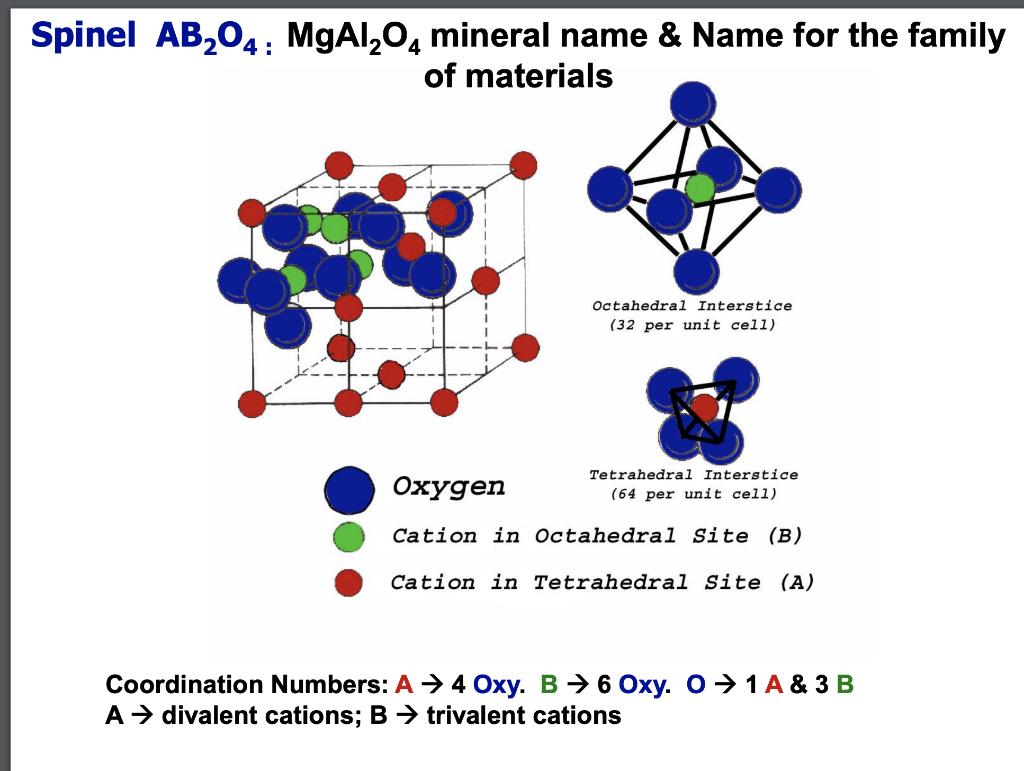
The crystal structure of hercynite is based on the characteristic spinel arrangement, with oxygen anions forming a cubic close-packed framework. Within this framework, metal cations occupy two types of interstitial sites: tetrahedral sites coordinated by four oxygen atoms and octahedral sites coordinated by six oxygen atoms. In the ideal structure, Fe²⁺ occupies the tetrahedral sites, while Al³⁺ occupies the octahedral sites. This arrangement is commonly described as a normal spinel structure and is responsible for many of the mineral’s crystallographic and physical characteristics.
Hercynite crystallizes in the cubic crystal system and commonly exhibits octahedral symmetry. Its ideal structural space group is Fd3̅m, which is characteristic of many spinel-group minerals. Individual crystals may develop as octahedra, although natural occurrences more frequently involve granular masses, irregular grains, and crystals embedded within metamorphic or igneous rocks. Twinning may also occur according to the spinel law, particularly along crystallographic planes associated with the octahedral form.
Chemical substitution is an important feature of natural hercynite. Magnesium can replace ferrous iron, producing intermediate compositions toward spinel (MgAl₂O₄), while zinc substitution creates a compositional relationship with gahnite (ZnAl₂O₄). Chromium may also replace aluminum, linking hercynite compositionally with chromite (FeCr₂O₄). These substitutions are influenced by the chemical composition, temperature, pressure, and oxidation conditions of the geological environment in which the mineral forms. Consequently, natural hercynite specimens may exhibit measurable variations in their chemical and physical properties.
Physical and Optical Properties of Hercynite
Hercynite is a relatively hard, dense oxide mineral characterized by dark coloration, vitreous luster, and an isotropic optical character. Its physical properties are closely related to its iron-aluminum composition and cubic crystal structure. Natural specimens commonly appear dark green, bluish green, brown, or nearly black. Dark green to black coloration is particularly typical, although lighter yellowish and brown varieties have also been documented. Thin sections may reveal a more distinctly dark green color, while larger crystals and massive specimens generally appear much darker because of their limited light transmission.
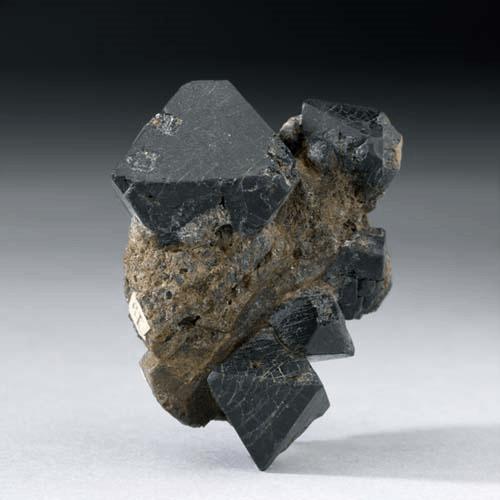
The mineral typically has a vitreous luster, producing a glass-like reflection on fresh crystal surfaces. Its transparency ranges from translucent to opaque, depending on crystal thickness, internal impurities, and the presence of inclusions. Thin edges of some crystals may transmit a limited amount of light, whereas larger grains are generally opaque. The streak is dark grayish green to dark green, providing a useful identification characteristic when combined with other physical properties.
Hercynite has a Mohs hardness of approximately 7.5 to 8, making it harder than many common rock-forming minerals. Its relatively high hardness allows it to resist ordinary scratching, although its brittle tenacity means that it can fracture under sufficient mechanical stress. The mineral commonly displays a conchoidal to uneven fracture. Distinct cleavage is generally absent, although parting along the 111 crystallographic planes has been reported. Its calculated specific gravity is approximately 4.39, reflecting the relatively high proportion of iron in its chemical composition.
Optically, hercynite is isotropic because of its cubic crystal structure. Under crossed polarizers in a polarizing microscope, it does not exhibit the birefringence characteristic of anisotropic minerals. Its refractive index generally falls between 1.80 and 1.83, indicating relatively strong light refraction. These optical characteristics are useful in petrographic examination, particularly when distinguishing hercynite from other dark oxide minerals occurring in metamorphic and igneous rocks. Variations in chemical composition and mineral intergrowths may influence the appearance of individual grains, so optical observations are commonly combined with chemical analysis and X-ray diffraction for reliable identification.
| Property | Description |
|---|---|
| Mineral class | Oxide |
| Chemical formula | FeAl₂O₄ |
| Crystal system | Cubic (Isometric) |
| Crystal habit | Octahedral, granular, massive |
| Color | Dark green, bluish green, brown, black |
| Streak | Dark grayish green to dark green |
| Luster | Vitreous |
| Transparency | Translucent to opaque |
| Mohs hardness | 7.5–8 |
| Specific gravity | Approximately 4.39 |
| Cleavage | Generally absent; parting reported |
| Fracture | Conchoidal to uneven |
| Tenacity | Brittle |
| Optical character | Isotropic |
| Refractive index | 1.80–1.83 |
Formation and Geological Occurrence of Hercynite
Hercynite primarily forms in high-temperature geological environments where iron and aluminum are available and silica activity is relatively low. It is particularly characteristic of metamorphic rocks that have undergone substantial thermal alteration, including granulite-facies rocks and contact metamorphic assemblages. Under these conditions, reactions between iron-bearing minerals and aluminum-rich components can produce hercynite as a stable mineral phase. Its formation is strongly influenced by temperature, pressure, oxygen fugacity, and the chemical composition of the original rock.
In regional metamorphic environments, hercynite may develop during the transformation of iron-rich, aluminum-bearing sedimentary rocks. These protoliths can contain mixtures of clay minerals, iron oxides, and other aluminum-bearing components that undergo recrystallization during progressive metamorphism. As temperature increases, the original minerals become unstable and react to form new mineral assemblages. Hercynite may occur alongside sillimanite, corundum, magnetite, and other high-temperature minerals, depending on the bulk composition and metamorphic conditions. Such assemblages are particularly useful in interpreting the thermal evolution and chemical environment of metamorphic terrains.
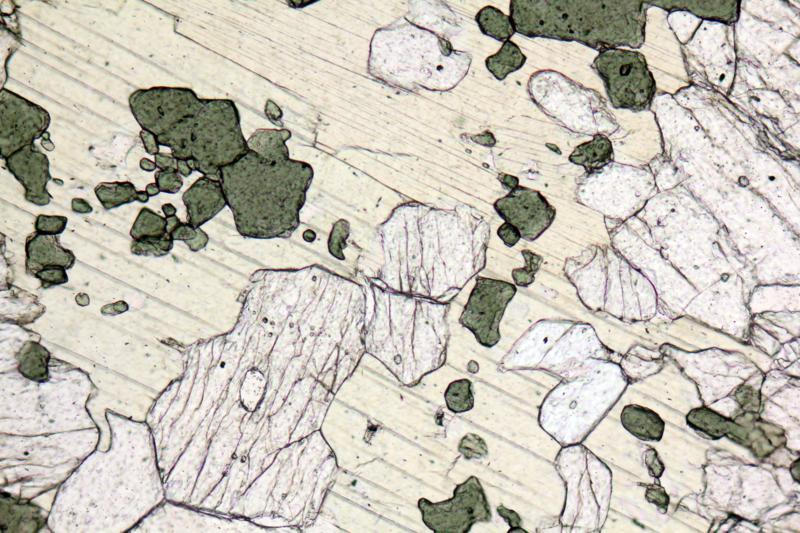
Hercynite also occurs in contact metamorphic rocks formed near intrusive igneous bodies. Heat transferred from magma into surrounding country rocks can produce localized high-temperature alteration, resulting in the formation of new oxide and silicate minerals. In aluminum-rich and iron-bearing rocks, hercynite may crystallize as small grains or octahedral crystals within the altered host material. The distribution and composition of these grains can provide information about the extent of thermal alteration and the chemical conditions prevailing during mineral formation.
In addition to metamorphic environments, hercynite has been documented in certain mafic and ultramafic igneous rocks, where it may form during magmatic crystallization or subsequent reactions involving iron- and aluminum-rich mineral components. It can also occur in volcanic environments and in secondary sedimentary deposits derived from the erosion of its original host rocks. Because of its relatively high hardness and resistance to weathering, individual grains may survive transportation and become concentrated in placer deposits.
Types and Varieties of Hercynite
Hercynite is a distinct mineral species within the spinel supergroup rather than a mineral with numerous formally recognized varieties. However, natural specimens exhibit compositional and physical variations resulting from chemical substitution, geological formation conditions, and interactions with associated minerals. These differences are particularly evident in the iron, magnesium, zinc, and chromium contents of individual specimens. Hercynite also forms solid-solution relationships with several other spinel-group minerals, making its compositional classification an important aspect of its mineralogy.
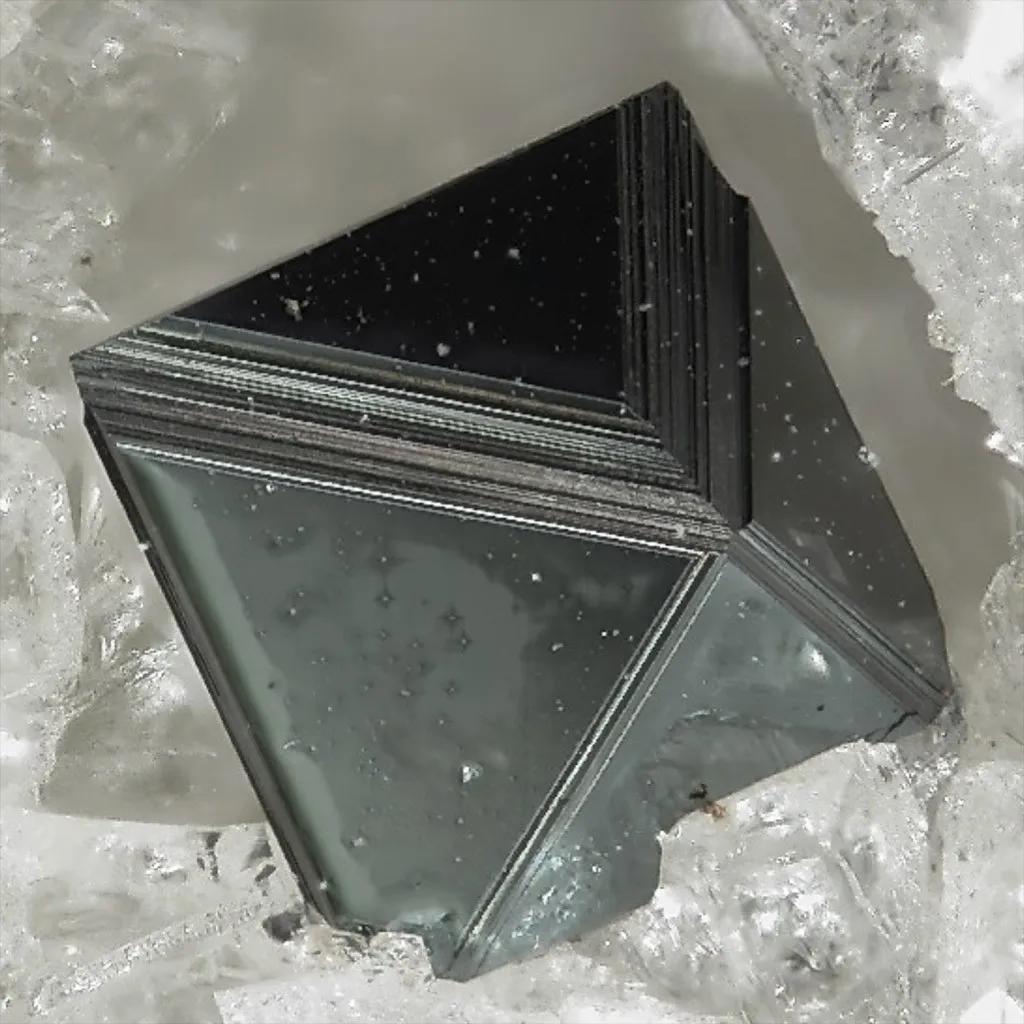
The most significant compositional relationship is the hercynite-spinel series. Hercynite (FeAl₂O₄) and spinel (MgAl₂O₄) share the same basic crystal structure, but differ in their dominant divalent cations. Iron occupies the corresponding structural sites in hercynite, whereas magnesium is dominant in spinel. Intermediate compositions may contain varying proportions of both elements, reflecting changes in the availability of iron and magnesium during mineral formation. This substitution can influence density, color, and other measurable physical properties.
Hercynite also has a compositional relationship with gahnite (ZnAl₂O₄), in which zinc replaces ferrous iron. Intermediate members of this series may contain substantial amounts of both iron and zinc. The relative proportions depend on the chemical environment during crystallization, particularly the availability of zinc-bearing and iron-bearing components. Such compositions are encountered in some metamorphic and metasomatic mineral assemblages.
Another important relationship occurs between hercynite and chromite (FeCr₂O₄). In this series, chromium substitutes for aluminum within the trivalent cation sites of the spinel structure. Chromium-bearing hercynite may therefore display chemical characteristics intermediate between aluminum-rich and chromium-rich spinels. These compositional variations are useful in geological studies because they can reflect differences in the original rock composition, metamorphic conditions, and subsequent mineral reactions.
Major Localities of Hercynite
Hercynite has been documented in numerous localities across Europe, Asia, Africa, North America, and other regions. Its distribution is closely associated with high-grade metamorphic rocks, aluminum-rich contact metamorphic environments, and certain mafic and ultramafic igneous formations. Although the mineral is geographically widespread, well-characterized specimens are relatively uncommon compared with more abundant spinel-group minerals.
The Czech Republic is particularly important in the mineral’s history because the original specimens were discovered in the Bohemian region. Poběžovice, historically known as Ronsberg, is recognized as the type locality. Additional occurrences have been reported from the surrounding Bohemian region, including areas near Nacetín and Hošlau. These localities are historically significant because they are associated with the original description and early mineralogical investigations of hercynite.
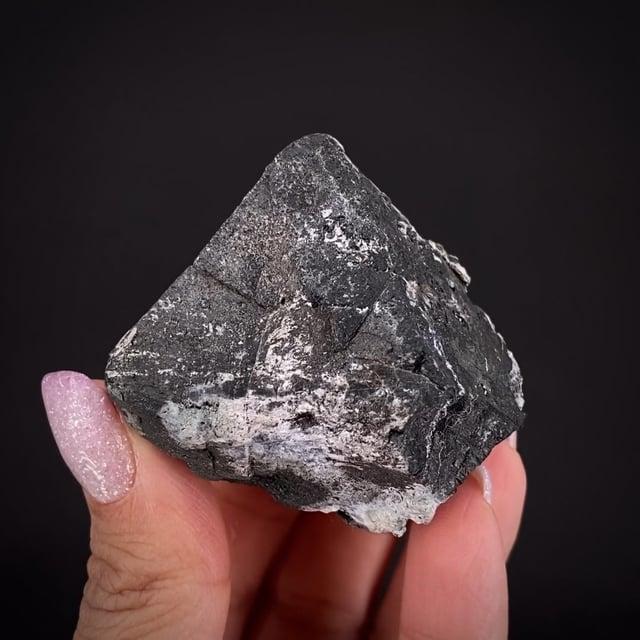
Germany contains several documented occurrences, particularly in the Black Forest, Bavaria, and the Eifel region. Specimens have been reported from Schenkenzell, Plößberg, Bodenmais, and Mendig. The Mendig area, within the Laacher See volcanic region, is also known for hercynite-bearing mineral assemblages associated with volcanic and contact-related geological processes. France has recorded occurrences near Lake Lherz in Ariège, while Scotland has produced specimens from the Isle of Mull, where hercynite occurs in high-temperature metamorphic and thermally altered rocks.
Outside Central and Western Europe, hercynite has been identified in the Khibiny Massif of the Kola Peninsula in Russia, as well as in parts of India and Madagascar. North American occurrences include Peekskill in New York, locations in Virginia, and the Rice area near San Carlos in Arizona. Mexico and Tasmania have also yielded reported specimens. These geographically diverse occurrences demonstrate that hercynite can develop under several geological conditions, provided that the necessary iron and aluminum components are available.
In addition to these historically documented localities, more recent mineralogical records include occurrences in China, Italy, Colombia, and other regions. Italian examples have been reported from areas including the Aosta Valley, Liguria, and parts of the Alps. The mineral may occur as individual grains, inclusions, or components of complex oxide assemblages, so its identification at a locality does not necessarily indicate the presence of large or well-formed crystals.
Uses and Applications of Hercynite
Hercynite has relatively limited direct commercial use as a naturally occurring mineral. Its importance is primarily associated with mineralogical research, high-temperature materials science, refractory technology, and geological investigations. Unlike economically important iron or aluminum ores, natural hercynite generally occurs in quantities and geological settings that do not support large-scale extraction specifically for industrial production.
One of the more relevant applications of hercynite is in the study and development of refractory materials. Its high melting temperature, chemical stability under suitable conditions, and resistance to elevated temperatures make the iron-aluminum oxide system of interest in ceramic and refractory research. Hercynite-bearing materials have been investigated for applications involving high-temperature furnaces, metallurgical processes, and specialized ceramic products. However, the performance of these materials depends on factors such as composition, oxidation conditions, thermal expansion, and interactions with other refractory components.
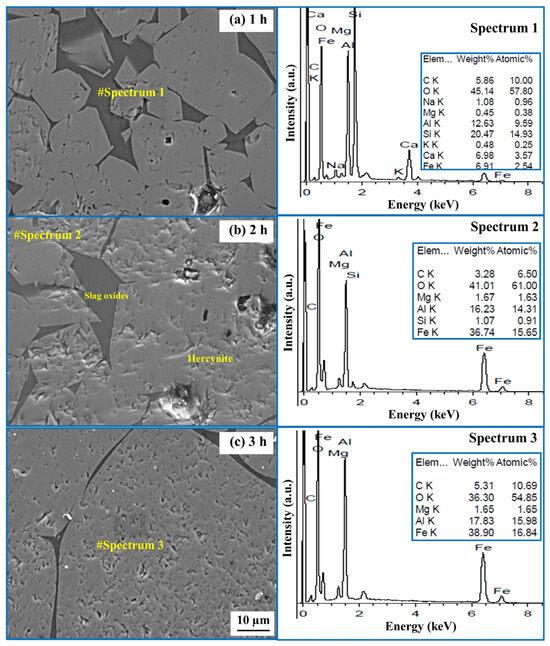
Hercynite is also studied in materials science because of its electrical, magnetic, and structural properties. The distribution and oxidation state of iron within its spinel structure influence its behavior under different temperatures and chemical conditions. Researchers have investigated synthetic hercynite and related spinel compounds to understand cation ordering, defect chemistry, solid-state reactions, and the effects of chemical substitution. These studies contribute to broader research into transition-metal oxides and functional ceramic materials.
In geology and mineralogy, hercynite is particularly useful as an indicator mineral in high-temperature metamorphic environments. Its presence alongside minerals such as corundum, sillimanite, magnetite, and ilmenite can help researchers reconstruct the pressure-temperature conditions experienced by a rock. Chemical variations within hercynite may also provide information about the composition of the original material and the reactions that occurred during metamorphism. For this reason, it is frequently considered in studies of granulite-facies rocks, contact metamorphism, and complex oxide assemblages.
Hercynite is occasionally collected as a mineral specimen, particularly when it occurs as distinct octahedral crystals or in association with other uncommon minerals. Its dark coloration and relatively high hardness make it recognizable to experienced collectors, although well-formed transparent crystals are uncommon. It is not widely used as a commercial gemstone because of its generally dark appearance, limited transparency, and relatively restricted availability in suitable crystal sizes.
How to Identify Hercynite
Identifying hercynite requires consideration of its physical properties, crystal form, geological environment, and chemical composition. Its dark green to black coloration is a useful initial characteristic, but color alone is insufficient for reliable identification because several spinel-group minerals and other oxide minerals have similar appearances. A combination of hardness, density, optical properties, and mineral associations provides a more dependable basis for distinguishing it from visually similar species.
The crystal habit can offer an initial indication. Hercynite commonly occurs as octahedral crystals, granular aggregates, or irregular grains embedded in metamorphic rocks. Its vitreous luster, dark greenish streak, and relatively high Mohs hardness of approximately 7.5 to 8 are additional diagnostic features. The mineral is generally brittle and lacks prominent cleavage, while its specific gravity is approximately 4.39. These properties can help distinguish it from softer dark minerals, although they may overlap with those of other iron-bearing spinels.
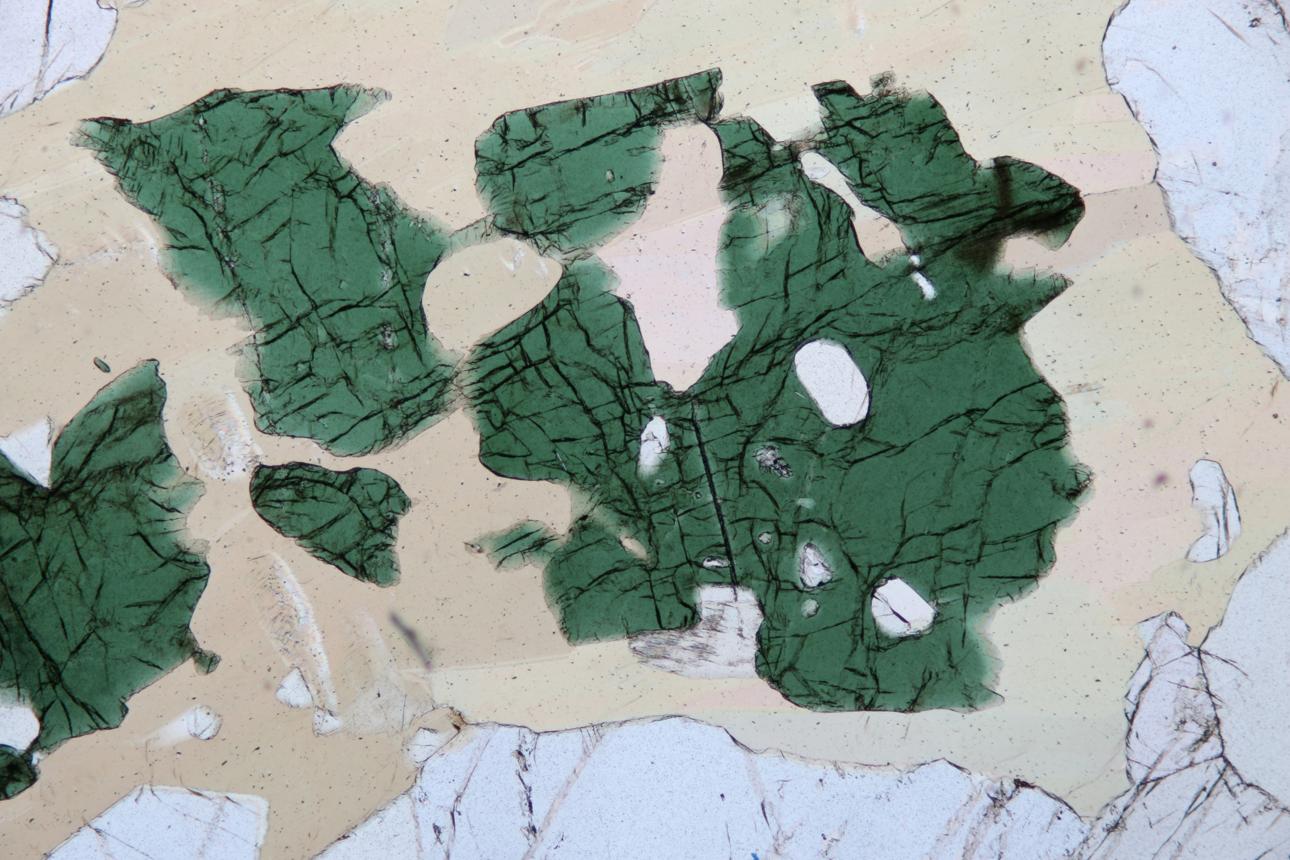
Under a polarizing microscope, hercynite exhibits isotropic optical behavior because it belongs to the cubic crystal system. This characteristic is useful in petrographic investigations, particularly when examining opaque or translucent oxide grains within metamorphic rocks. Its refractive index, generally around 1.80–1.83, also provides useful optical information when suitable material is available for examination. However, optical properties alone may not establish the exact mineral species when several spinel-group minerals occur together.
For definitive identification, chemical analysis is particularly important. Energy-dispersive X-ray spectroscopy (EDS or EDAX) and electron microprobe analysis can determine the relative proportions of iron, aluminum, magnesium, zinc, chromium, and other elements. These measurements help establish whether iron is the dominant divalent cation and whether the composition corresponds to hercynite rather than spinel, gahnite, or chromite. X-ray diffraction (XRD) can further confirm the cubic spinel structure and provide information about the crystallographic characteristics of the specimen.
The geological context should also be considered during identification. Hercynite is commonly associated with high-grade metamorphic rocks, aluminum-rich and silica-poor assemblages, and certain igneous environments. Its occurrence alongside corundum, sillimanite, magnetite, and ilmenite can support a preliminary identification. Nevertheless, mineral associations should be treated as supporting evidence rather than definitive proof, since many of these minerals occur in geological environments containing several different spinel-group species.
Hercynite and Similar Minerals
Hercynite belongs to the spinel supergroup, a group of oxide minerals characterized by similar crystal structures but different chemical compositions. Several members of this group have comparable physical appearances, particularly when they occur as dark green, brown, or black granular crystals. Spinel, gahnite, chromite, and magnetite are among the minerals that may be confused with hercynite. Although these minerals share some structural characteristics, differences in their dominant chemical elements, optical properties, density, and geological associations help distinguish them.
Hercynite vs. Spinel
Hercynite (FeAl₂O₄) and spinel (MgAl₂O₄) have closely related compositions and share the same cubic crystal structure. The primary difference is the dominant divalent cation: iron in hercynite and magnesium in spinel. Typical spinel specimens occur in a much broader range of colors, including red, pink, blue, violet, and colorless, whereas hercynite is generally dark green to black. Hercynite also has a higher specific gravity, approximately 4.39 compared with 3.55–3.63 for typical magnesium-rich spinel. Both minerals have high hardness and may develop octahedral crystals.
Hercynite vs. Gahnite
Gahnite (ZnAl₂O₄) is the zinc-dominant aluminum spinel and is chemically related to hercynite through iron-zinc substitution. Both minerals commonly occur as dark green to black crystals and may have similar vitreous luster and octahedral habits. However, gahnite contains zinc as its dominant divalent element, whereas hercynite is dominated by ferrous iron. Their refractive indices and densities can overlap, making visual identification difficult. Chemical analysis is therefore particularly useful for distinguishing these two minerals.
Hercynite vs. Chromite
Chromite (FeCr₂O₄) is another member of the spinel supergroup, but it is primarily a chromium-bearing oxide rather than an aluminum-dominant mineral. Both chromite and hercynite can appear dark brown, greenish-black, or black and commonly occur as granular aggregates. Their geological environments also differ in many cases: chromite is particularly associated with mafic and ultramafic igneous rocks, while hercynite is frequently encountered in high-temperature metamorphic rocks and aluminum-rich environments. Chemical analysis can distinguish them through their relative chromium and aluminum contents.
Hercynite vs. Magnetite
Magnetite (Fe₃O₄) is an iron oxide mineral with a cubic spinel-type structure. It is usually black, opaque, and strongly magnetic, whereas hercynite is generally dark green to black and does not normally exhibit the strong magnetic response characteristic of magnetite. Magnetite also contains both ferrous and ferric iron, while ideal hercynite contains ferrous iron and aluminum. Their chemical compositions and magnetic properties provide important criteria for distinguishing them, particularly when both occur in the same metamorphic or igneous rock.
Comparison Table: Hercynite and Similar Minerals
| Mineral | Chemical Formula | Dominant Element | Typical Color | Specific Gravity |
|---|---|---|---|---|
| Hercynite | FeAl₂O₄ | Iron | Dark green to black | 4.39 |
| Spinel | MgAl₂O₄ | Magnesium | Red, pink, blue, violet | 3.55–3.63 |
| Gahnite | ZnAl₂O₄ | Zinc | Green to dark blue | 4.0–4.62 |
| Chromite | FeCr₂O₄ | Chromium | Brownish black to black | 4.5–4.8 |
| Magnetite | Fe₃O₄ | Iron | Black | 5.15–5.20 |