
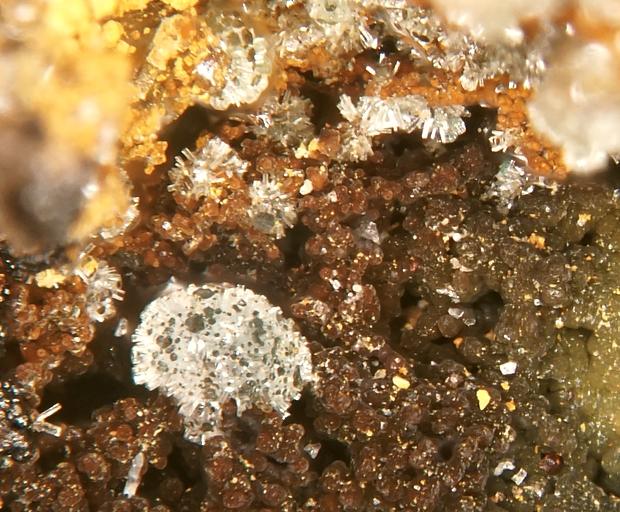
Kuksite is a rare lead-zinc tellurate phosphate mineral with the chemical formula Pb₃Zn₃TeO₆(PO₄)₂. It belongs to the Dugganite Group and is characterized by a chemical composition that combines lead, zinc, tellurium, phosphorus, and oxygen. The mineral was first described in 1990 and is recognized as a valid species by the International Mineralogical Association (IMA). Its type locality is the Delbe orebody in the Kuranakh ore field, Aldan, Sakha Republic, Russia, where it was identified in association with tellurium-bearing gold mineralization.
Kuksite typically occurs as very small, thin tabular crystals and crystalline aggregates. Individual crystals are generally microscopic, making well-developed specimens relatively uncommon. Its reported color is gray, although pale green transparent crystal plates have also been documented in specimens from certain localities. The mineral has an adamantine luster, a white streak, and a relatively high calculated specific gravity of approximately 6.21, reflecting its substantial lead content. Its reported Mohs hardness is around 5.
Kuksite is of particular interest in mineralogical research because of its complex crystal chemistry and relationship to other members of the Dugganite Group. It forms structural and compositional relationships with minerals such as dugganite and joëlbruggerite, and distinguishing these species may require detailed chemical analysis rather than visual examination alone. Its occurrence in oxidized, tellurium-rich mineral deposits also provides information about the geochemical processes responsible for the formation of uncommon tellurium-bearing minerals.
History and Discovery of Kuksite
Kuksite was officially described in 1990 following its identification in the Kuranakh ore field in the Aldan region of the Sakha Republic, Russia. The mineral was assigned the IMA approval reference 1989-018, indicating that its proposal was submitted in 1989 before its formal publication. Its discovery contributed to the documentation of complex tellurium-bearing minerals occurring in association with gold mineralization in the region.
The mineral was named in honor of Anatoly Ilyich Kuks, a Russian geologist and one of the discoverers of the Kuranakh deposit. The name recognizes his contribution to the geological investigation of this mineralized region. The original material established kuksite as a distinct mineral species based on its chemical composition and crystallographic characteristics.
Subsequent research expanded the understanding of kuksite’s crystal chemistry and structural relationships. A detailed investigation published in American Mineralogist in 2010 examined its crystal structure and chemical composition, providing more precise information about the arrangement of lead, zinc, tellurium, phosphate groups, and oxygen within its structure. This work also clarified its relationship with other minerals in the Dugganite Group.
Crystal Structure and Chemical Composition of Kuksite
Kuksite has the chemical formula Pb₃Zn₃TeO₆(PO₄)₂, also expressed as Pb₃Zn₃TeP₂O₁₄. Its composition contains lead (Pb), zinc (Zn), tellurium (Te), phosphorus (P), and oxygen (O). Lead and zinc are the principal metallic constituents, while tellurium occurs in its hexavalent oxidation state (Te⁶⁺). Phosphorus forms phosphate groups (PO₄) that contribute to the mineral’s structural framework. The combination of tellurate and phosphate components distinguishes kuksite from many other phosphate minerals and places it within a relatively uncommon group of complex lead-zinc tellurium-bearing minerals.
Kuksite crystallizes in the trigonal crystal system and belongs to the space group P321, according to modern single-crystal X-ray diffraction studies. Earlier mineralogical descriptions reported orthorhombic symmetry based on the limited crystallographic data available at the time. Subsequent structural refinement using better-characterized specimens established its trigonal symmetry and provided more accurate unit-cell parameters. Specimens from the Black Pine mine in Montana have reported lattice dimensions of approximately a = 8.392 Å and c = 5.204 Å, with one formula unit per unit cell. These measurements helped establish the crystallographic characteristics of the mineral.
At the atomic scale, the structure consists of interconnected coordination polyhedra containing lead, zinc, and tellurium, together with phosphate groups. The arrangement of these structural units is closely related to that found in dugganite and joëlbruggerite. In particular, kuksite shares an isostructural relationship with these minerals, meaning that they possess closely corresponding structural arrangements despite differences in chemical composition. This structural relationship is important for understanding the chemical substitutions that occur within the group and the formation of compositionally related mineral species.
Chemical analyses have also demonstrated that kuksite can participate in solid-solution relationships with dugganite and joëlbruggerite. These relationships involve substitutions among elements occupying corresponding structural positions, particularly involving phosphorus, arsenic, antimony, and tellurium. The extent of substitution can vary between specimens depending on their geological environment and formation conditions. Consequently, natural kuksite may contain minor amounts of elements that are not represented in its ideal chemical formula. Electron microprobe analysis, Raman spectroscopy, and X-ray diffraction are useful methods for examining these compositional and structural variations.
Physical Properties of Kuksite
Kuksite is generally described as a gray mineral, although its appearance can vary depending on crystal thickness, transparency, and associated mineral impurities. It has an adamantine luster, which results from its relatively high refractive indices. Its streak is white, and thin fragments may appear translucent to transparent. Individual crystals are typically very small, with reported dimensions reaching approximately 0.3 mm. They commonly develop as thin tabular crystals with well-defined crystal faces. Because of their limited size, kuksite specimens are often difficult to distinguish through visual examination alone.
The mineral has a brittle tenacity and one direction of perfect cleavage. Its calculated specific gravity is approximately 6.21, a relatively high value largely attributable to its substantial lead content. A reliable Mohs hardness value has not been established in the commonly cited mineralogical descriptions. However, micro-indentation measurements have reported a Vickers hardness of approximately 325 under a 10-gram load. Kuksite also exhibits weak fluorescence under ultraviolet radiation, although this property is not generally sufficient for identification without supporting analytical evidence.
Optical Properties of Kuksite
Kuksite is an optically biaxial negative mineral, with reported refractive indices of α = 1.971(5) and γ = 1.981(5). Its high refractive indices are consistent with its adamantine luster and dense chemical composition. The measured optic axial angle (2V) is approximately 12°–20°, indicating a relatively small angle between its two optic axes. Optical observations also report positive elongation and dispersion in which red light is refracted more strongly than violet light under the notation r greater than v. These characteristics provide additional information for mineralogical identification and comparison with structurally related species.
Geological Formation and Occurrence of Kuksite
Kuksite is a rare secondary mineral primarily associated with oxidized gold-bearing deposits containing tellurium, lead, and zinc. It forms during the late stages of mineral alteration, when primary ore minerals are exposed to near-surface weathering and interact with oxygenated groundwater. These processes can mobilize elements from pre-existing minerals and allow them to recombine into new secondary mineral phases. The formation of kuksite requires the availability of lead, zinc, tellurium, and phosphate, together with suitable chemical conditions for the precipitation of its complex tellurate-phosphate structure. Its occurrence is therefore closely linked to localized geochemical environments rather than widespread mineral-forming processes.
Major Localities of Kuksite
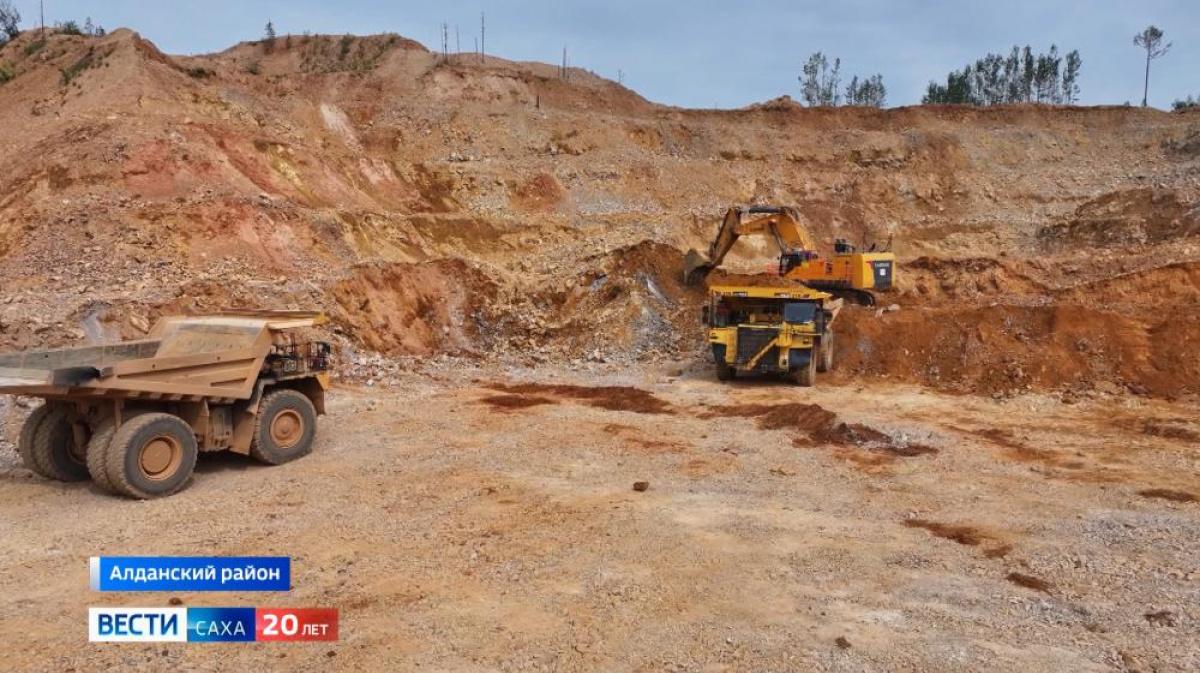
Kuksite has been documented from a relatively small number of localities worldwide. Its type locality is the Delbe orebody in the Kuranakh ore field, Aldan, Sakha Republic, Russia. This occurrence remains particularly important because it provided the original material used to describe the mineral. The Kuranakh region contains several tellurium-bearing mineral species associated with gold mineralization, making it an important locality for studying uncommon secondary tellurates.
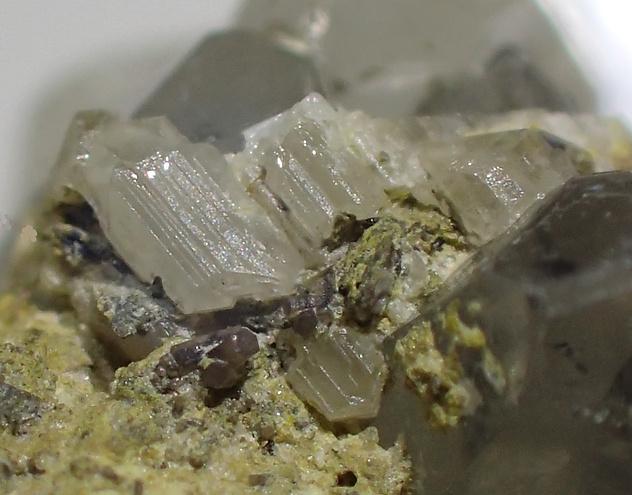
In the United States, kuksite has been reported from several localities in the western states. The Black Pine mine in Granite County, Montana, is notable for specimens containing pale green transparent crystals in quartz cavities. In California, the Blue Bell mine in the Soda Mountains, San Bernardino County, has yielded kuksite associated with other secondary copper and tellurium minerals. Additional occurrences have been recorded in Arizona, particularly in the Carr Canyon area of Cochise County, as well as in mining districts in Utah and Nevada. These localities provide further evidence of the mineral’s association with oxidized polymetallic and gold-bearing mineral deposits.
Although kuksite has been recorded at multiple localities, it remains uncommon in mineral collections. Its small crystal size, restricted geological occurrence, and association with other chemically similar minerals make it difficult to obtain and identify. Many reported specimens require microscopic examination and analytical confirmation to establish their mineral identity.
Mineral Associations of Kuksite
Kuksite occurs in association with a range of secondary minerals, particularly those containing copper, lead, zinc, tellurium, arsenic, vanadium, and phosphorus. These minerals commonly develop in oxidized portions of hydrothermal ore deposits, where weathering and fluid-rock interactions produce complex assemblages of secondary phases. The precise mineral associations vary according to the original ore composition and the chemical conditions during alteration.
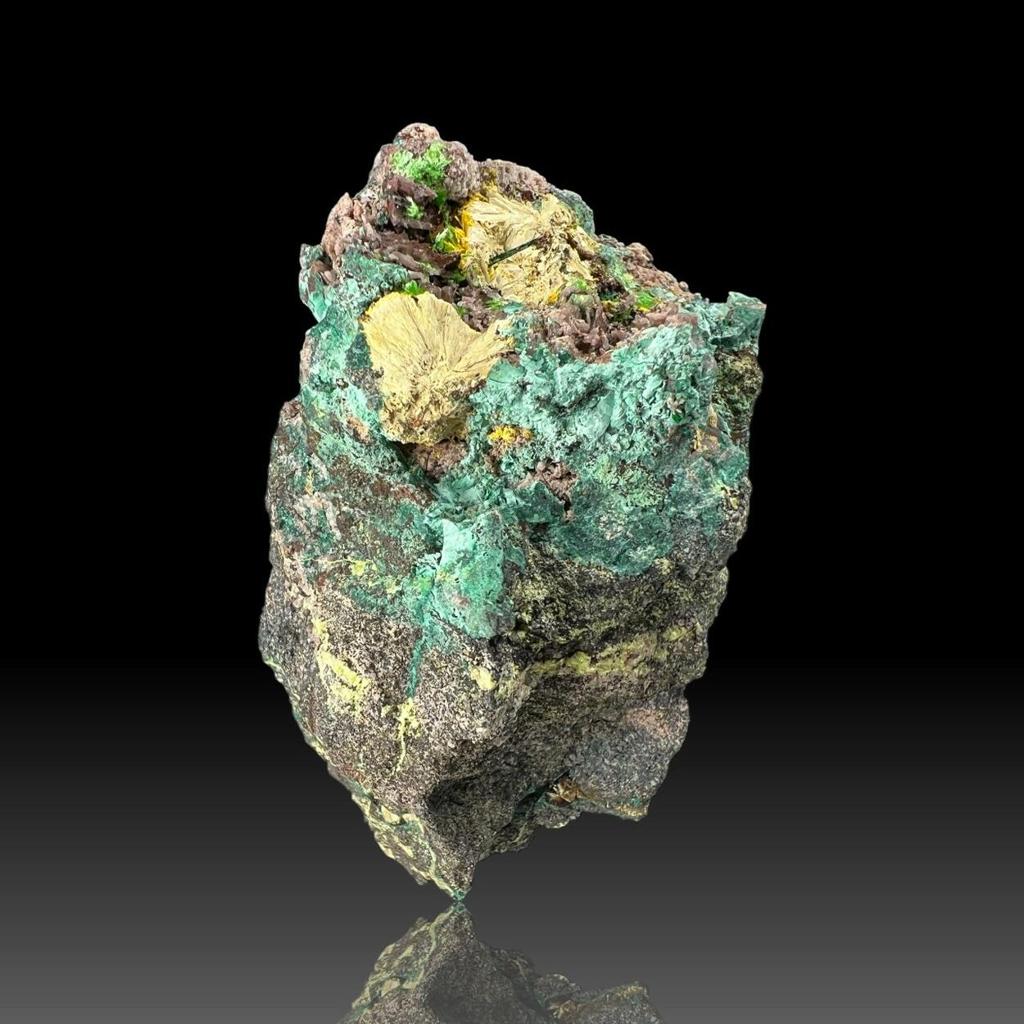
At the Kuranakh type locality, reported associated minerals include cheremnykhite, descloizite, dugganite, and yafsoanite. These species reflect the availability of tellurium, lead, zinc, vanadium, and other elements within the mineralized system. At the Black Pine mine, kuksite has been found with azurite, malachite, pseudomalachite, chalcocite, duftite, beudantite-corkite, dugganite, and joëlbruggerite. The coexistence of these minerals provides useful information about the distribution and mobility of metallic elements during the oxidation of the deposit.
The association between kuksite, dugganite, and joëlbruggerite is particularly relevant to mineral classification. These minerals have closely related crystal structures and can exhibit compositional substitutions, making their identification more complicated than that of minerals with distinctly different chemical compositions. As a result, specimens that appear similar under a microscope may require electron microprobe analysis and structural studies to determine their exact species.
Uses and Applications of Kuksite
Kuksite has no significant commercial or industrial applications because of its extreme rarity, small crystal size, and limited availability. Unlike common phosphate minerals such as apatite, it does not occur in quantities suitable for use as an industrial raw material. Its complex composition, which includes lead, zinc, and tellurium, is of greater interest to mineralogical research than to commercial extraction.
The primary importance of kuksite lies in its value as a mineralogical specimen and a subject of crystallographic and geochemical investigation. Its structural relationship with dugganite, joëlbruggerite, and other related minerals provides opportunities to study chemical substitution and the arrangement of different elements within complex mineral structures. Research on kuksite also contributes to a broader understanding of tellurium-bearing mineral assemblages and the behavior of tellurium during the oxidation of hydrothermal ore deposits.
Kuksite is occasionally collected by mineral enthusiasts and researchers specializing in rare secondary minerals and tellurium-bearing species. However, its microscopic crystal dimensions mean that it is generally preserved as part of a larger rock specimen rather than collected as an individual crystal. Well-documented specimens can be useful for reference collections, particularly when their locality and mineral associations are known.
How to Identify Kuksite
Kuksite is difficult to identify through visual examination because of its small crystal size and resemblance to other minerals in the Dugganite Group. Its typical appearance consists of thin tabular crystals or plate-like aggregates, usually gray but occasionally pale green in certain specimens. The adamantine luster, white streak, and relatively high specific gravity of approximately 6.21 provide useful preliminary characteristics. However, these properties are not sufficient to establish its identity, particularly when dealing with microscopic material.
Its chemical composition provides one of the most important means of identification. Kuksite contains lead, zinc, tellurium, and phosphorus, with the ideal formula Pb₃Zn₃TeO₆(PO₄)₂. Electron microprobe analysis can determine the relative proportions of these elements and identify substitutions involving vanadium, arsenic, silicon, and other elements. This is particularly important because kuksite forms compositional relationships with structurally related minerals, including dugganite and joëlbruggerite. At some localities, the three minerals occur together and cannot be reliably distinguished by appearance alone.
X-ray diffraction is another important identification technique because it provides information about the mineral’s crystal structure and symmetry. Single-crystal X-ray diffraction can establish its crystallographic characteristics, while powder diffraction patterns can help distinguish kuksite from other minerals with similar chemical compositions. Optical microscopy and Raman spectroscopy may provide additional information when suitable material is available. In practice, a combination of chemical and crystallographic analyses offers the most reliable identification.
Types and Varieties of Kuksite
Kuksite is recognized as an individual mineral species rather than a mineral group with multiple formally established varieties. Its chemical composition and crystal structure define its position within the Dugganite Group. Although natural specimens may exhibit variations in color, crystal habit, and minor-element composition, these differences do not constitute separate officially recognized varieties.
The mineral can contain minor substitutions involving elements such as vanadium, arsenic, silicon, and calcium. These variations reflect differences in the chemical environment during mineral formation and the ability of certain elements to occupy corresponding positions within the crystal structure. For example, vanadium may partially substitute for phosphorus in phosphate-related structural positions, while calcium may replace a portion of the lead. Such substitutions have been documented in chemical analyses of material from the Kuranakh deposit.
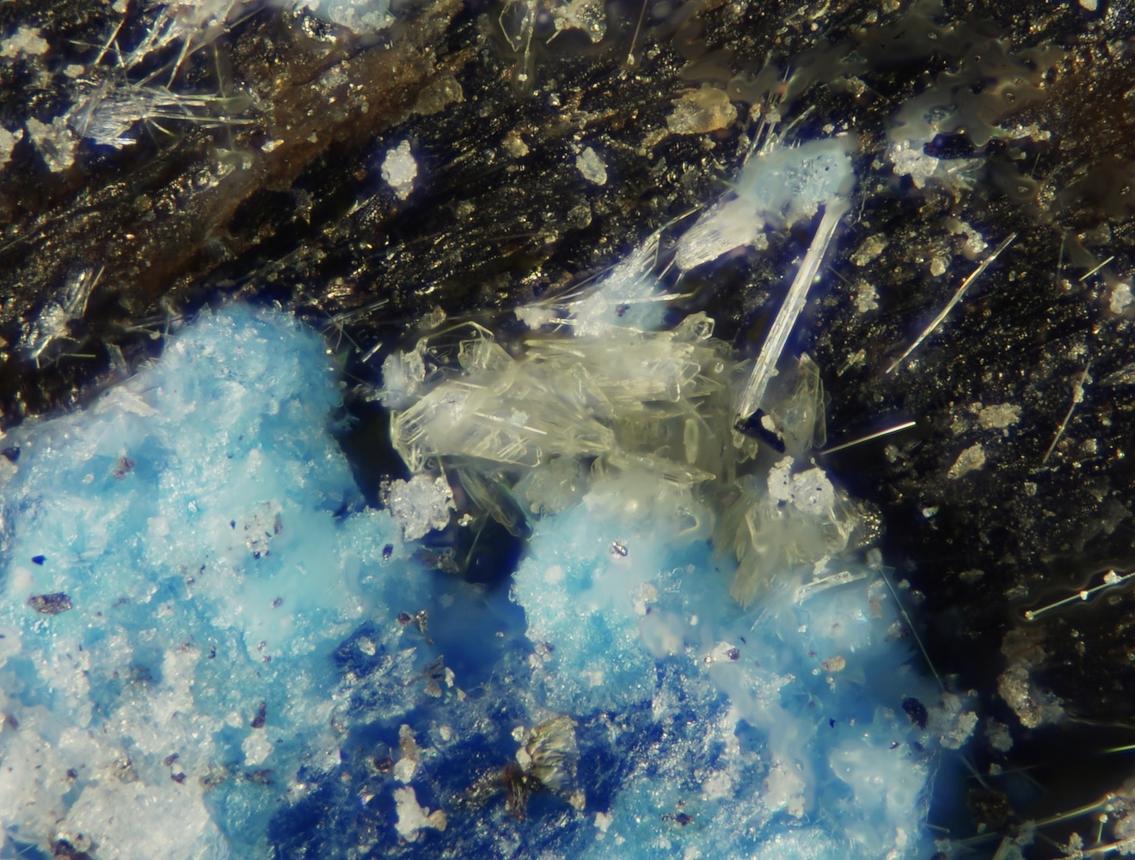
Differences in appearance have also been reported between localities. Specimens from the Russian type locality are generally described as gray, whereas material from the Black Pine mine in Montana includes pale green, transparent, plate-like crystals arranged in rosette-shaped aggregates. These variations are useful for describing individual occurrences but do not represent formally classified kuksite varieties.
Kuksite and Similar Minerals
Kuksite can be confused with several minerals that share similar chemical components, crystal structures, or geological environments. The most relevant comparisons involve other members of the Dugganite Group, particularly dugganite and joëlbruggerite. Their similarities are mainly related to structural relationships and compositional substitutions, making analytical methods necessary for accurate identification.
| Mineral | Chemical Formula | Main Distinguishing Feature |
|---|---|---|
| Kuksite | Pb₃Zn₃TeO₆(PO₄)₂ | Contains phosphate groups and hexavalent tellurium |
| Dugganite | Pb₃Zn₃TeO₆(AsO₄)₂ | Contains arsenate groups instead of phosphate groups |
| Cheremnykhite | Pb₃Zn₃TeO₆(VO₄)₂ | Contains vanadate groups instead of phosphate groups |
| Joëlbruggerite | Pb₃Zn₃Sb⁵⁺As₂O₁₃(OH) | Contains antimony and arsenic in a related structural group |
These minerals illustrate the compositional diversity found within the Dugganite Group. Kuksite is distinguished primarily by its phosphate-bearing composition, whereas dugganite and cheremnykhite contain arsenate and vanadate groups, respectively. Joëlbruggerite has a different chemical composition but shares important structural relationships.