
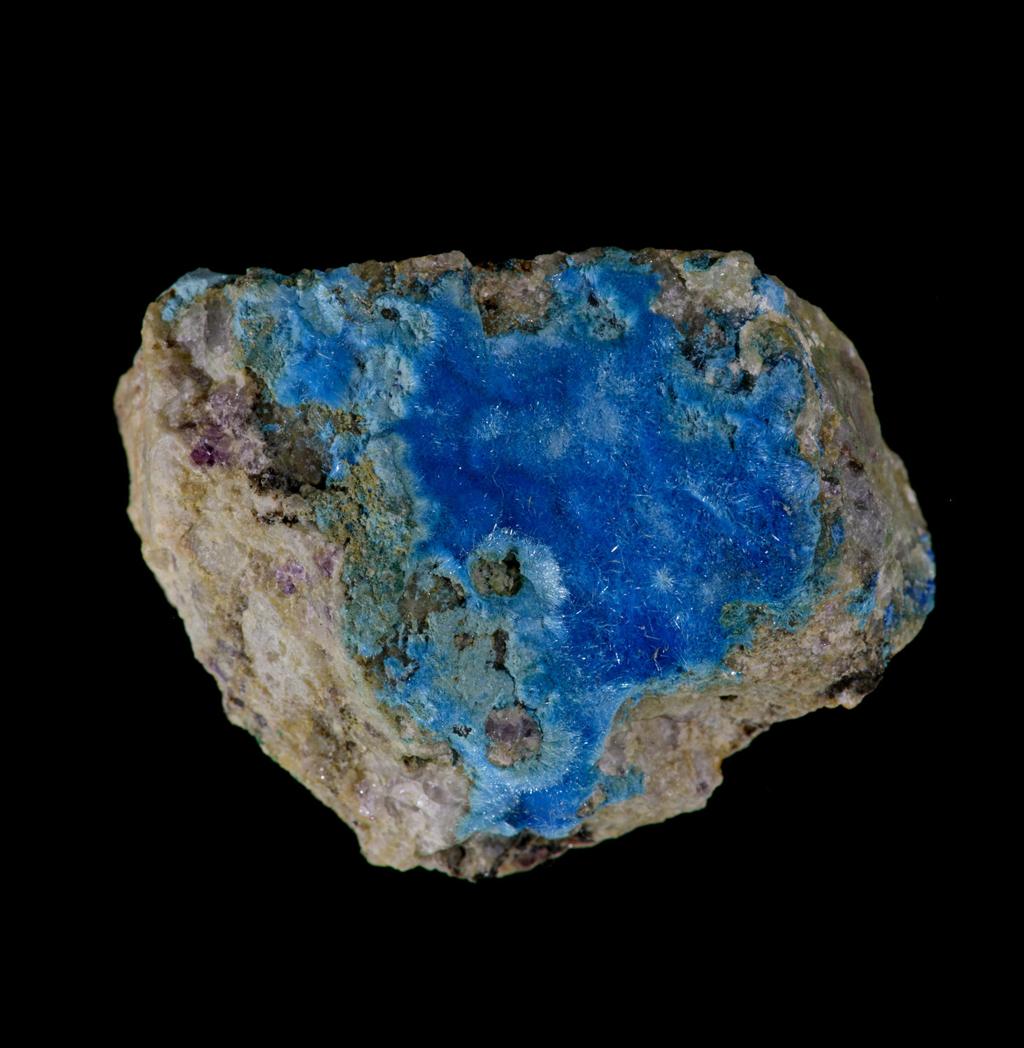
Khaidarkanite is a rare copper aluminum fluoride hydroxide mineral with the chemical formula Cu₄Al₃(OH)₁₄F₃·2H₂O. It is characterized by its light blue to bright sky-blue coloration and commonly occurs as extremely fine, elongated crystals arranged in fibrous, radiating, or divergent aggregates. The mineral belongs to the cyanotrichite structural group and is classified among the halide minerals because of the essential fluorine in its chemical composition. Its unusual combination of copper, aluminum, hydroxyl groups, fluoride, and molecular water distinguishes it from many other secondary copper minerals found in oxidized ore deposits.
Khaidarkanite was first identified at the Khaidarkan antimony-mercury deposit in Kyrgyzstan, where it occurs as a secondary mineral within highly oxidized, copper-bearing geological formations. Its formation is closely related to the weathering of fluorine-rich mineral assemblages, particularly in environments where fluorite and copper-bearing minerals are exposed to circulating groundwater and oxygen. The availability of fluoride ions is an important factor in its formation, as fluorine is an essential structural component rather than a minor impurity. This chemical requirement makes Khaidarkanite relatively uncommon compared with more widespread secondary copper minerals such as malachite and chrysocolla.
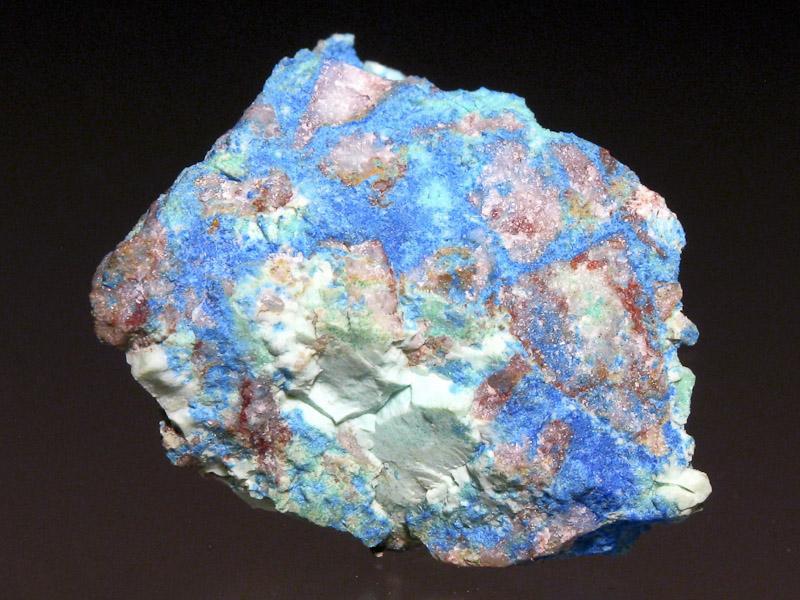
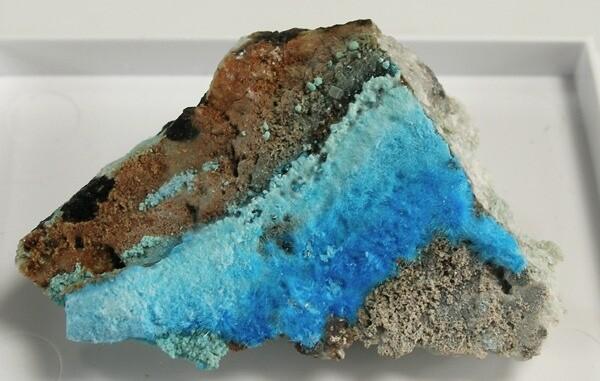
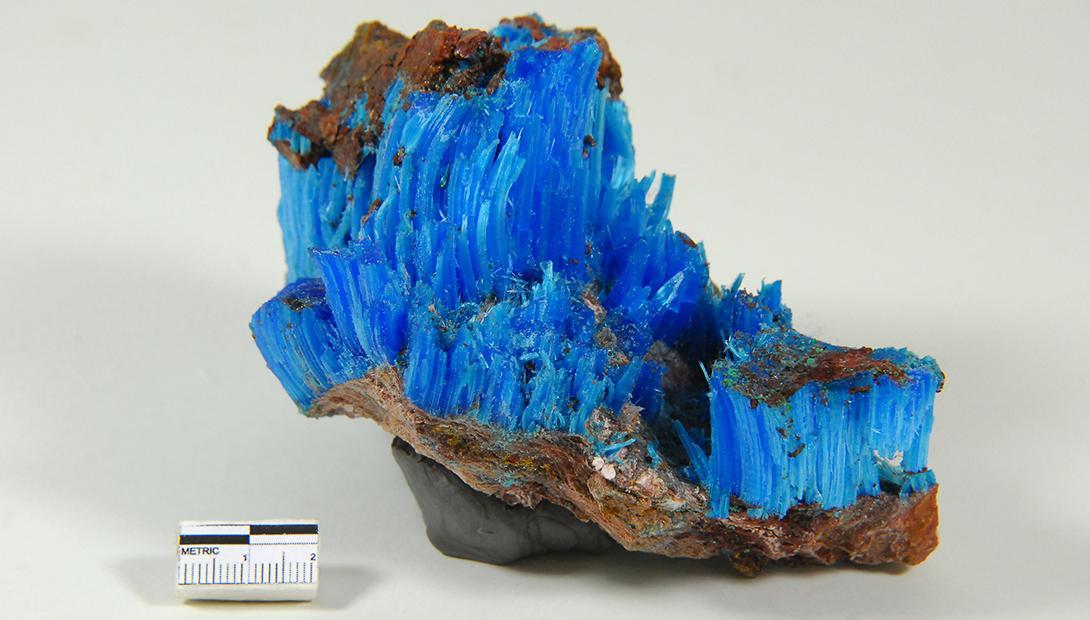
In mineral specimens, Khaidarkanite is generally found as delicate blue coatings, fine acicular crystal sprays, and fibrous aggregates covering cavities or irregular surfaces within the host rock. Individual crystals can reach several millimeters in length, although many specimens contain much smaller crystals that form dense, velvety-looking coatings. Its appearance can resemble that of Cyanotrichite and other blue fibrous copper minerals, making chemical and crystallographic examination important for accurate identification.
Although Khaidarkanite has no significant commercial or industrial application, it is of interest to mineralogists and specialist collectors because of its rarity, distinctive fluoride-bearing composition, and relationship to other members of the cyanotrichite structural group. Its occurrence also provides information about the geochemical conditions responsible for the formation of secondary copper-aluminum minerals in oxidized, fluorine-rich mineral deposits.
Discovery and Naming of Khaidarkanite
Khaidarkanite was identified as a distinct mineral species from the Khaidarkan antimony-mercury deposit in southwestern Kyrgyzstan, Central Asia. The locality is part of a mineralized region known for its complex mercury, antimony, fluorine, and other metal-bearing deposits. The unusual blue fibrous material attracted mineralogical attention because its composition and structural characteristics differed from those of previously described secondary copper minerals. Its recognition added another rare fluoride-bearing species to the mineral assemblages documented from the Khaidarkan mining district.
The mineral’s name is derived from Khaidarkan, the mining locality in Kyrgyzstan where it was discovered. The name preserves the geographical association between the species and its type occurrence. Khaidarkan is internationally recognized in mineralogical literature for its diverse secondary mineral assemblages, particularly those associated with the oxidation of complex sulfide deposits. The discovery of Khaidarkanite further demonstrated the mineralogical diversity that can develop in deposits containing copper, aluminum, and fluorine.
The mineral was approved by the International Mineralogical Association (IMA) in 1998 under reference number IMA 1998-013. Its formal description was published in 1999 by N. V. Chukanov, V. Y. Karpenko, R. K. Rastsvetaeva, A. E. Zadov, and O. V. Kuz’mina in the Russian mineralogical journal Zapiski Vserossiyskogo Mineralogicheskogo Obshchestva, volume 128, issue 3, pages 58–63. The original description established its chemical composition as Cu₄Al₃(OH)₁₄F₃·2H₂O and documented its monoclinic crystal system. Earlier crystallographic research published in 1997 had already investigated the unusual copper-aluminum fluoride hydroxide compound from the same locality, providing important structural information for its subsequent recognition as a new mineral species.
The original research established Khaidarkanite as a distinct mineral rather than simply a color or chemical variety of an existing copper mineral. Subsequent investigations further examined its composition and structural characteristics. An early analytical formula included a small amount of sodium, represented as Na₀.₃₄Cu₄Al₃(OH)₁₄F₃·2H₂O. Later mineralogical references treated sodium as a variable component or possible impurity rather than an essential constituent of the ideal mineral formula. The currently accepted ideal formula therefore does not include sodium. This distinction is important when comparing older analytical results with modern mineral databases.
Chemical Composition and Classification of Khaidarkanite
Khaidarkanite has the ideal chemical formula Cu₄Al₃(OH)₁₄F₃·2H₂O. It is a hydrated copper aluminum fluoride hydroxide containing copper (Cu), aluminum (Al), oxygen (O), hydrogen (H), and fluorine (F). Copper and aluminum form the principal metallic components, while hydroxyl groups, fluoride ions, and molecular water contribute to the mineral’s chemical and structural characteristics. The presence of three fluorine atoms per formula unit is particularly important because it distinguishes Khaidarkanite from many other hydrated copper hydroxide minerals that do not contain essential fluorine.
Copper accounts for a substantial proportion of the mineral’s composition and is primarily present in the divalent oxidation state (Cu²⁺). Aluminum occurs as trivalent aluminum (Al³⁺), contributing to the arrangement of metal-centered coordination units within the crystal structure. The hydroxyl groups provide additional oxygen and hydrogen components, while molecular water is incorporated into the hydrated structure. Fluorine occupies specific anion positions and is an essential part of the mineral’s composition rather than an incidental trace element.
In mineralogical classification, Khaidarkanite belongs to the halide class and is recognized as a member of the Cyanotrichite structural group. Although its formula contains a considerable number of hydroxyl groups and it is commonly found alongside secondary copper minerals, its essential fluorine content is a defining chemical feature. It is also important to distinguish its structural-group classification from its broader mineral class: the Cyanotrichite group describes a structural relationship among related minerals, whereas the halide classification reflects its chemical composition.
The ideal formula has a calculated molecular mass of approximately 666.25 g/mol. Its theoretical chemical composition is dominated by copper and oxygen, with aluminum and fluorine making up significant additional proportions. Minor compositional variations have been reported in analytical studies, particularly involving sodium and sulfate. However, these variations do not change the essential chemical definition of Khaidarkanite as a copper aluminum fluoride hydroxide mineral.
Crystal Structure of Khaidarkanite
Khaidarkanite crystallizes in the monoclinic crystal system and belongs to the prismatic crystal class 2/m. Its reported space group is C2/m, and its crystal structure is closely related to those of other minerals in the Cyanotrichite group. The refined unit-cell parameters are approximately a = 12.346(3) Å, b = 2.907(3) Å, and c = 10.369(7) Å, with a monoclinic angle β of 97.90(2)°. The unit-cell volume is approximately 368.61 ų, with one formula unit per unit cell (Z = 1). These crystallographic parameters were established through single-crystal X-ray diffraction and provide an important basis for distinguishing Khaidarkanite from other hydrated copper minerals.
The structure consists primarily of copper- and aluminum-centered coordination octahedra connected through shared edges and other oxygen-bearing structural components. Copper occurs predominantly in octahedral coordination, surrounded by oxygen atoms from hydroxyl groups and water molecules. Aluminum occupies more than one crystallographic position, contributing to the connections between different structural units. These arrangements produce extended structural ribbons and layers that form the basic framework of the mineral. The relatively short b-axis, measuring approximately 2.907 Å, is associated with the direction in which metal-centered octahedra share edges.
Fluorine plays a particularly important role in the structure of Khaidarkanite. Unlike many secondary copper minerals in which hydroxyl groups and water molecules dominate the anion arrangement, Khaidarkanite incorporates fluoride ions into aluminum-centered coordination environments. Some aluminum positions are only partially occupied, and their coordination involves both fluoride ions and molecular water. This arrangement contributes to the overall structural organization and helps maintain the chemical balance of the mineral. The distribution of aluminum and fluorine between the structural layers is also an important feature distinguishing Khaidarkanite from related members of the Cyanotrichite group.
Molecular water is incorporated into the crystal structure rather than occurring solely as external moisture or surface contamination. Together with hydroxyl groups, it contributes to the coordination environment of aluminum and copper and participates in hydrogen bonding. These interactions help stabilize the hydrated structure and influence the relationships between adjacent structural units. The combination of metal-centered octahedra, fluoride-bearing aluminum sites, hydroxyl groups, and molecular water gives Khaidarkanite a more complex structural arrangement than its relatively simple visual appearance might suggest.
Research published in The Canadian Mineralogist in 2009 examined the structural relationships among Khaidarkanite, Cyanotrichite, Carbonate-cyanotrichite, and Camerolaite. The study showed that these minerals share a related structural framework, although differences in chemical composition and the ordering of structural sites produce variations in symmetry and unit-cell dimensions. Khaidarkanite is particularly important in this comparison because its single-crystal structure had been determined, allowing the arrangements of the other group members to be interpreted in relation to its structural model.
Physical Properties of Khaidarkanite
Khaidarkanite is best known for its light blue to bright sky-blue coloration, which is one of its most recognizable physical characteristics. The color is associated with its copper-bearing composition, as Cu²⁺ ions commonly produce blue and blue-green colors in secondary copper minerals. Individual specimens may display different shades depending on crystal thickness, aggregate density, lighting conditions, and the nature of the surrounding matrix. Some material appears pale blue or turquoise-blue, while well-developed crystal aggregates can show a more saturated sky-blue color. Its streak is also light blue, providing an additional physical characteristic for mineral identification.
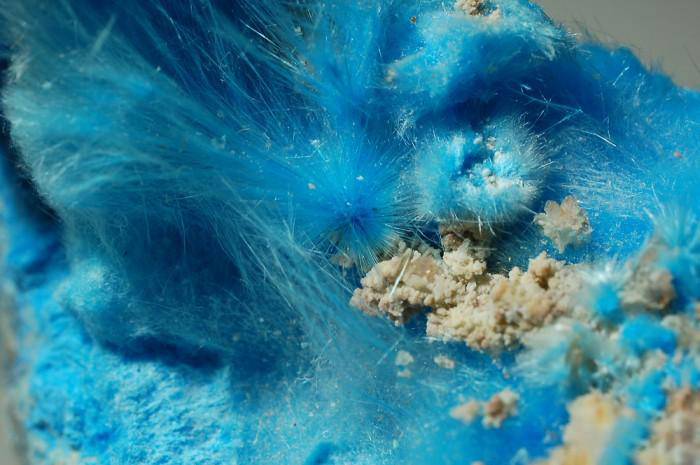
The mineral commonly occurs as acicular to tabular crystals, with individual crystals reported to reach approximately 7 mm in length. These crystals may develop into divergent radial aggregates, forming sprays of slender needles that extend outward from a common point or surface. Radial aggregates are generally much smaller, commonly reaching around 1 mm across. In some specimens, the crystals form dense fibrous coatings on cavities and irregular surfaces, producing a fine-textured appearance. The delicate nature of these aggregates means that well-preserved specimens may require careful handling and protection from mechanical damage.
Khaidarkanite has a vitreous luster and is generally translucent. Thin individual crystals may allow light to pass through, whereas densely packed aggregates can appear more opaque because of overlapping crystal fibers. Its Mohs hardness is approximately 2.5, placing it among relatively soft minerals that can be scratched by harder common materials. The mineral has a measured specific gravity of approximately 2.84, while its calculated density is around 3.00–3.04, depending on the crystallographic data and calculation used. These values reflect its copper-rich composition and hydrated structure.
Optically, Khaidarkanite is biaxial positive, with reported refractive indices of α = 1.585(2), β = 1.615(3), and γ = 1.648(2). Its calculated optic axial angle (2V) is approximately 80°–90°. Pleochroism is also reported, with the X direction appearing colorless, the Y direction sky blue, and the Z direction bright blue. The strongest absorption occurs along the Z direction, followed by Y and X. These optical characteristics provide additional diagnostic information for distinguishing Khaidarkanite from visually similar blue copper minerals.
The available mineralogical descriptions do not provide definitive cleavage and fracture measurements for all specimens. Consequently, these characteristics should be treated cautiously when identifying natural material. The combination of blue coloration, acicular or radiating crystal habits, low hardness, vitreous luster, and characteristic optical properties provides a more useful identification profile than any single physical feature.
Geological Formation of Khaidarkanite
Khaidarkanite is a secondary mineral that forms in highly oxidized, copper-bearing, fluorite-rich environments. Its development is associated with the near-surface alteration of mineralized veins, where groundwater, atmospheric oxygen, and weathering processes interact with pre-existing copper- and fluorine-bearing minerals. Unlike primary minerals that crystallize directly from magma or hydrothermal fluids at depth, Khaidarkanite develops during later stages of geological alteration, when elements released from earlier mineral assemblages become available for the formation of new mineral phases.
The availability of fluorine is particularly important to its formation. At the type locality, the Khaidarkan antimony-mercury deposit in Kyrgyzstan, fluorite (CaF₂) occurs within the mineralized vein material. During weathering, fluorite-bearing rocks may undergo chemical reactions that release fluoride into circulating water. Under certain local conditions, small quantities of hydrofluoric acid (HF) may also develop through interactions between fluoride-bearing material and acidic weathering solutions. The original mineralogical observations indicate that such processes can create a fluorine-rich environment suitable for the formation of Khaidarkanite. This relationship between fluorite alteration and secondary fluoride mineral formation is one of the most distinctive aspects of its geological occurrence.
Copper is supplied through the oxidation and dissolution of pre-existing copper-bearing minerals. As these minerals weather, copper ions can enter groundwater and migrate through fractures, cavities, and porous sections of the host rock. Aluminum may be supplied by the alteration of aluminum-bearing minerals or other components of the surrounding geological material. When copper and aluminum become available together with sufficient fluoride and hydroxyl ions, conditions may become favorable for the precipitation of hydrated copper aluminum fluoride hydroxide. The incorporation of molecular water into the resulting crystal structure reflects the relatively low-temperature, water-rich conditions commonly associated with secondary mineral formation near the Earth’s surface.
The formation of Khaidarkanite also depends on the chemical conditions of the surrounding environment. The availability of dissolved copper, aluminum, and fluoride, together with pH, water activity, and the concentration of competing anions, can influence whether Khaidarkanite or another secondary mineral develops. Sulfate and carbonate ions, for example, may participate in the formation of other copper-aluminum minerals within the same oxidation zone. Consequently, Khaidarkanite is not expected to form throughout an entire mineral deposit simply because fluorite and copper minerals are present. Its occurrence requires a more specific combination of chemical and hydrological conditions.
The mineral typically develops as fine crystals and fibrous aggregates on cavity surfaces and within altered vein material. These textures indicate that crystallization took place in open spaces or along existing mineral surfaces where mineral-bearing solutions could circulate. The small size and delicate arrangement of its crystals are consistent with precipitation during near-surface alteration rather than the growth of large primary crystals at elevated temperatures. Although its general formation environment is established, the precise sequence of dissolution, transport, and crystallization reactions responsible for individual Khaidarkanite specimens has not been fully resolved.
Mineral Associations of Khaidarkanite
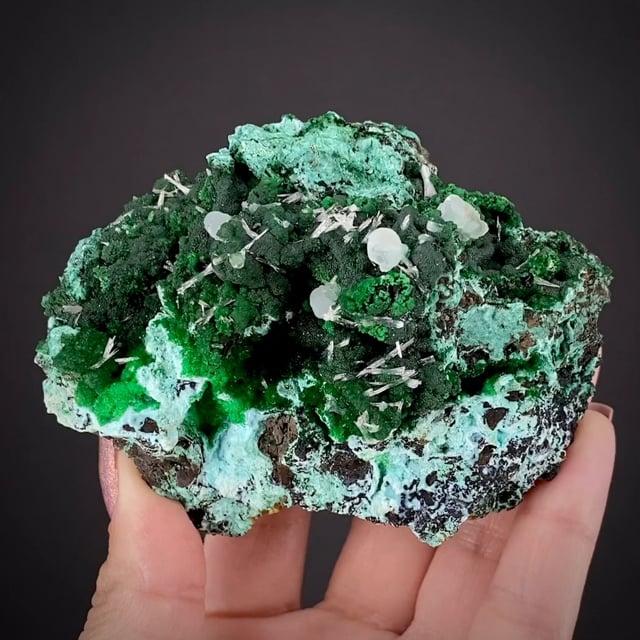
Khaidarkanite occurs with a range of secondary copper minerals, aluminum-bearing alteration products, and common vein minerals. Its documented associations at the type locality include fluorite, malachite, chrysocolla, conichalcite, copper-bearing allophane, calcite, quartz, and baryte (barite). These minerals represent different chemical products of the same broader weathering environment, where copper, aluminum, calcium, barium, fluorine, carbonate, and arsenate or silicate components are redistributed through the oxidized portions of the deposit. Their coexistence provides important information about the chemical diversity of the mineral-forming environment.
Fluorite is particularly important because it provides a potential source of the fluorine required by Khaidarkanite. Its association with fluorite-rich vein material is consistent with the mineral’s fluoride-bearing composition and the proposed role of fluorine-rich weathering solutions in its formation. Malachite and chrysocolla represent other forms of secondary copper mineralization. Malachite is a copper carbonate hydroxide, whereas chrysocolla is a hydrated copper-bearing silicate material with variable composition. Both can form through the weathering and redistribution of copper in oxidized deposits, although their formation involves different anionic components from those required by Khaidarkanite.
Conichalcite, with the ideal formula CaCu(AsO₄)(OH), is a calcium copper arsenate hydroxide that may occur in oxidized arsenic-bearing mineral environments. Its presence alongside Khaidarkanite illustrates the diversity of secondary mineral reactions possible within the same deposit. Copper-bearing allophane represents another type of alteration product, generally occurring as poorly crystalline or amorphous material rather than as well-defined crystals. Aluminum-bearing alteration phases are also relevant because aluminum is an essential component of Khaidarkanite’s chemical structure.
Calcite, quartz, and baryte are additional associated minerals that commonly occur in hydrothermal veins and their weathered derivatives. They may form part of the host material, occur as cavity fillings, or provide surfaces upon which secondary minerals develop. However, their presence does not necessarily mean that they formed at the same time as Khaidarkanite. The mineral assemblage may record several successive stages of mineral deposition and alteration, with some minerals forming during earlier hydrothermal activity and others developing during later oxidation and weathering.
The association of Khaidarkanite with fluorite, copper minerals, and aluminum-bearing phases is particularly useful when interpreting its geological setting. It suggests that the mineral forms where fluorine-rich fluids or weathering solutions interact with copper- and aluminum-bearing material. Nevertheless, the presence of these associated minerals should be regarded as supporting geological evidence rather than a definitive identification method, since similar assemblages can contain other blue secondary copper minerals.
Occurrence and Notable Localities of Khaidarkanite
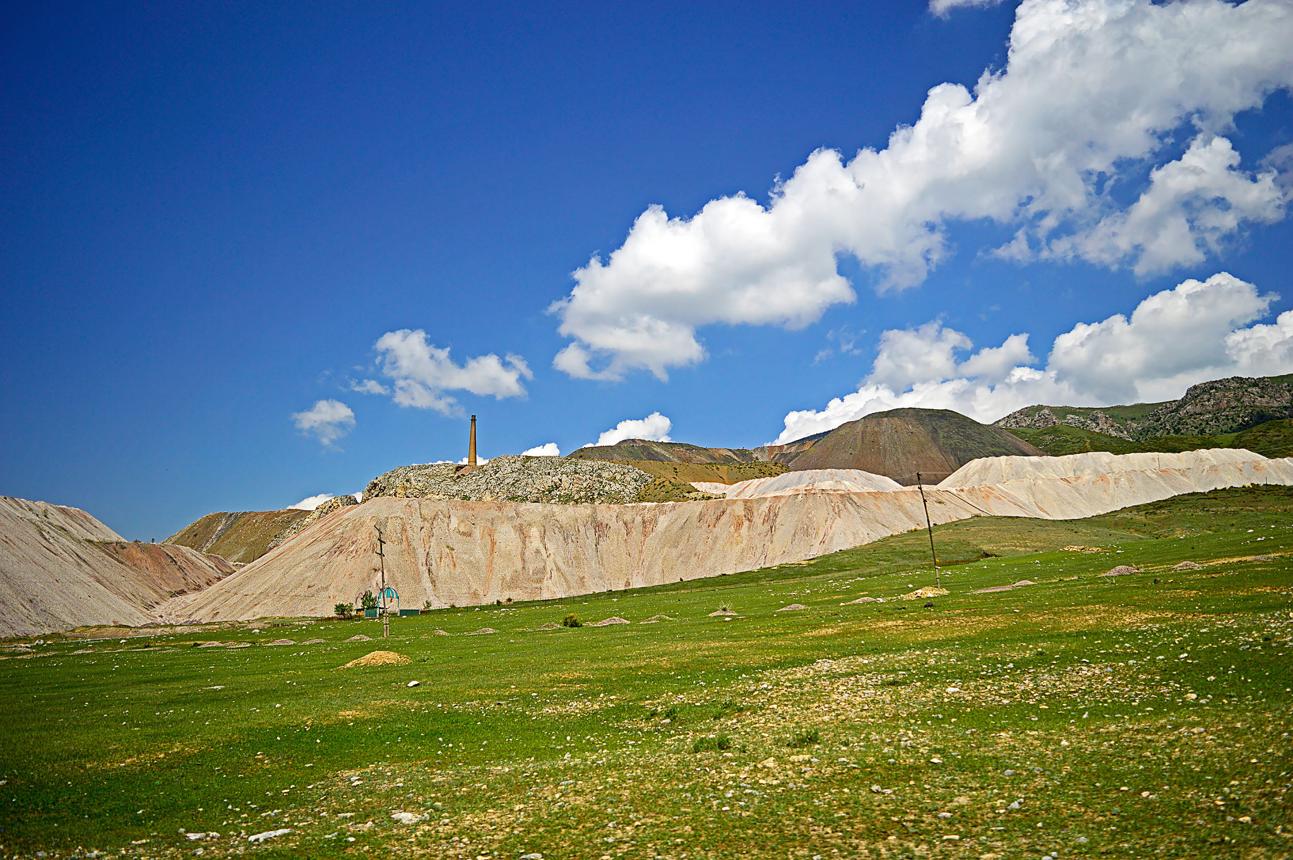
Khaidarkanite is an uncommon mineral with a relatively restricted documented distribution. Its type locality is the Khaidarkan antimony-mercury deposit near Aydarken, in the Kadamjay District of Batken Region, southwestern Kyrgyzstan. The deposit lies within the Fergana Valley region and forms part of the broader Central Asian mercury-antimony metallogenic belt. The area is known for complex mineralization involving mercury, antimony, fluorite, and other metallic elements. Its diverse geological and geochemical conditions have produced numerous unusual secondary minerals, including several species that are rare or poorly represented at other localities.
At the Khaidarkan deposit, Khaidarkanite occurs in the oxidation zone of copper-bearing, fluorite-rich vein material. The mineral has been documented as flat, acicular crystals reaching approximately 7 mm in length, as well as divergent radial aggregates measuring up to about 1 mm across. Fibrous aggregates and thin blue coatings are also characteristic forms. The type material is associated with fluorite, malachite, chrysocolla, conichalcite, calcite, quartz, baryte, copper-bearing allophane, and an aluminum fluorohydroxide. These associations reflect the chemical diversity of the weathering environment and the availability of copper, aluminum, and fluorine during secondary mineral formation.
An additional occurrence was documented at Great Sled Dale, Angram Common, near Keld in Swaledale, North Yorkshire, England. This locality represents the first reported British occurrence of Khaidarkanite and was described by T. F. Cotterell and I. Dossett in 2018 in the Proceedings of the Yorkshire Geological Society. The discovery extended the known geographical distribution of the mineral beyond its original Central Asian locality. At Great Sled Dale, Khaidarkanite occurs in highly oxidized, copper-bearing, fluorite-rich vein material. The local geological conditions are notable because weathering of fluorite-bearing material may produce small amounts of hydrofluoric acid, providing a possible mechanism for the availability and transport of fluorine during mineral formation.
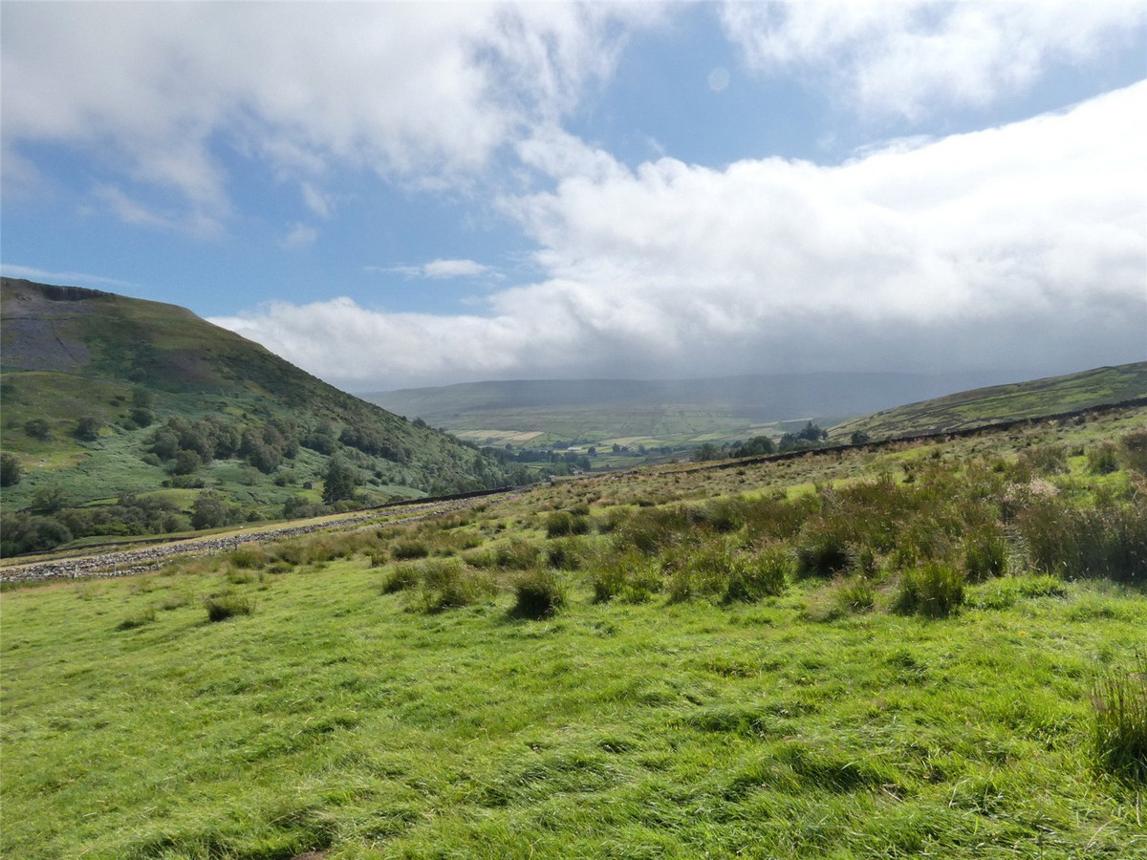
The British occurrence is particularly relevant because it demonstrates that Khaidarkanite is not restricted to the specific geological setting of the Khaidarkan antimony-mercury deposit. Instead, it can develop in other environments where copper-bearing mineralization, aluminum sources, and fluorine-rich alteration conditions occur together. Nevertheless, confirmed occurrences remain limited, and the mineral is still considered rare in comparison with more widespread secondary copper minerals.
Uses and Applications of Khaidarkanite
Khaidarkanite has no established commercial or industrial applications. Its rarity, delicate crystal aggregates, relatively low hardness, and limited availability make it unsuitable for large-scale industrial processing. Although it contains a significant proportion of copper, its occurrence in small quantities and fine-grained aggregates means that it has no practical value as a copper ore. Its essential fluorine content is also of mineralogical rather than commercial importance because the mineral is not found in sufficient concentrations to serve as a source of fluorine.
Its primary significance is scientific and mineralogical. Khaidarkanite provides useful information about the formation of secondary copper-aluminum minerals in fluorine-rich oxidation environments. Its composition and structural relationship with Cyanotrichite and Carbonatecyanotrichite allow researchers to investigate how different anions, including fluoride, sulfate, and carbonate, influence the chemical composition and structural organization of related minerals. These comparisons contribute to a broader understanding of mineral substitution, crystal chemistry, and the stability of hydrated copper-bearing phases.
Khaidarkanite is also of interest to specialist mineral collectors because of its bright blue coloration, acicular crystal habit, and relatively restricted geographical distribution. Well-preserved specimens may display fine radial sprays or dense coatings of blue crystals on contrasting mineral matrices. However, the individual crystals are often fragile, and their delicate fibrous structure requires careful handling. The mineral is primarily collected for scientific study and mineralogical collections rather than for gemstone cutting or jewelry production.
Identification of Khaidarkanite
Khaidarkanite can be recognized initially by its characteristic light blue to bright sky-blue color, fine acicular crystal habit, and tendency to form divergent radial aggregates. It commonly occurs as delicate sprays of slender crystals or fibrous coatings on fluorite-rich and copper-bearing mineral matrices. Individual crystals may be elongated and tabular, while densely developed aggregates can produce a soft, fibrous appearance. These features are useful for preliminary identification, particularly in specimens originating from known fluorite-bearing oxidation zones. However, its appearance is not sufficiently distinctive to establish the mineral species without additional testing.
One of the main identification challenges is its resemblance to Cyanotrichite and Carbonatecyanotrichite. All three minerals can occur as blue fibrous or acicular aggregates and contain copper and aluminum as major structural elements. Their chemical compositions, however, differ significantly. Khaidarkanite is distinguished by its essential fluoride content, whereas Cyanotrichite is a hydrated copper aluminum sulfate hydroxide and Carbonatecyanotrichite contains carbonate and commonly sulfate components. Consequently, the detection of fluorine is particularly important when examining a suspected Khaidarkanite specimen.
Chemical analysis is one of the most reliable methods of confirming its identity. Electron microprobe analysis can determine the relative concentrations of copper, aluminum, fluorine, and other elements, allowing the measured composition to be compared with the ideal formula Cu₄Al₃(OH)₁₄F₃·2H₂O. Because the original analyses reported minor sodium and sulfate, natural specimens may show small compositional variations. These components should be evaluated carefully rather than automatically treated as essential constituents of the mineral. In particular, the current ideal formula does not include sodium.
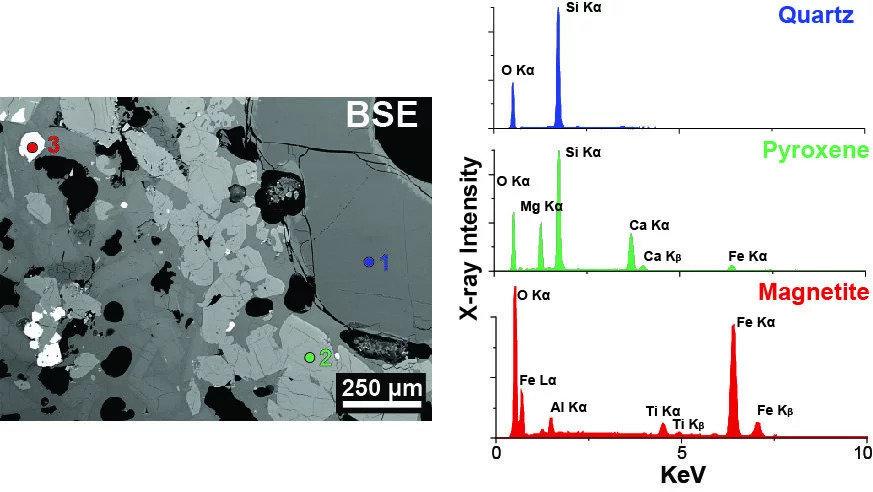
Powder X-ray diffraction provides another important identification method. It allows the crystalline structure and diffraction pattern of a specimen to be compared with established reference data for Khaidarkanite. Single-crystal X-ray diffraction can provide more detailed structural information when sufficiently large and well-preserved crystals are available. These methods are particularly useful when distinguishing Khaidarkanite from visually similar members of the Cyanotrichite group, whose external crystal habits and colors may overlap.
Optical examination can provide additional supporting evidence. Khaidarkanite is biaxial positive and displays characteristic pleochroism, with different colors observed along different optical directions. Its reported refractive indices are α = 1.585, β = 1.615, and γ = 1.648. The combination of optical properties, chemical composition, and crystallographic data provides a much more dependable identification than color or crystal habit alone.
Because Khaidarkanite is relatively soft, with a Mohs hardness of approximately 2.5, physical testing should be performed cautiously. Its fine crystal sprays can be damaged easily by scratching, abrasion, or mechanical handling. A non-destructive examination using microscopy, Raman spectroscopy, and X-ray diffraction is generally preferable when working with valuable or limited specimens.
Khaidarkanite and Similar Minerals
Khaidarkanite belongs to the Cyanotrichite structural group, a group of copper- and aluminum-bearing minerals with related structural arrangements but different chemical compositions. Several members of this group develop blue fibrous or acicular crystal aggregates, making them difficult to distinguish through visual examination alone. Their similarities are particularly noticeable in specimens containing fine radial sprays, silky coatings, or delicate needle-shaped crystals. Chemical composition and crystallographic characteristics are therefore essential for separating these species.
The closest comparisons include Cyanotrichite, Carbonatecyanotrichite, and Camérolaite. Khaidarkanite differs from these minerals primarily through its fluoride-bearing composition. Cyanotrichite contains sulfate as an essential component, while Carbonatecyanotrichite incorporates carbonate and sulfate in its anion arrangement. Camérolaite has a more complex composition involving copper, aluminum, antimony, and sulfate. Although these minerals share structural relationships, their chemical differences are significant enough to establish them as separate mineral species.
| Mineral | Chemical Formula | Main Distinguishing Feature |
|---|---|---|
| Khaidarkanite | Cu₄Al₃(OH)₁₄F₃·2H₂O | Fluoride-bearing copper aluminum hydroxide |
| Cyanotrichite | Cu₄Al₂(SO₄)(OH)₁₂·2H₂O | Hydrated copper aluminum sulfate hydroxide |
| Carbonatecyanotrichite | Cu₄Al₂(CO₃,SO₄)(OH)₁₂·2H₂O | Contains carbonate and sulfate components |
| Camérolaite | Cu₆Al₃(OH)₁₈(H₂O)₂Sb(OH)₆ | Contains essential antimony and sulfate |
Cyanotrichite is perhaps the most visually comparable mineral because it commonly develops fine blue needle-like crystals and radiating fibrous aggregates. Both minerals contain copper and aluminum and occur in secondary mineral environments. However, Cyanotrichite is a sulfate mineral, whereas Khaidarkanite is a fluoride-bearing hydroxyhalide. Carbonatecyanotrichite also resembles Khaidarkanite in appearance, but its carbonate- and sulfate-bearing composition provides a clear chemical distinction. Camérolaite differs further through its essential antimony component and more complex structural chemistry.
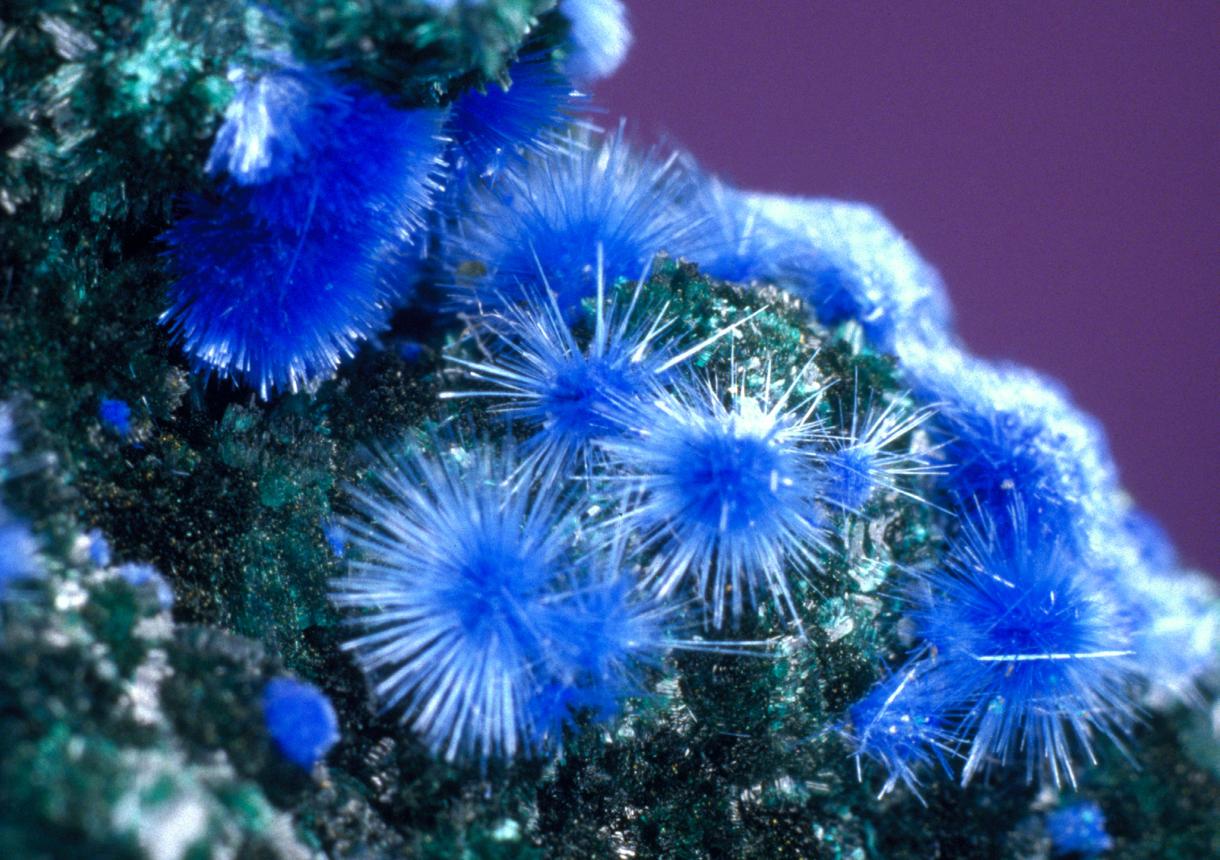
These similarities demonstrate why the identification of Khaidarkanite should not rely exclusively on its blue color or acicular habit. Even specimens from similar geological environments may contain different members of the same structural group. Powder X-ray diffraction and quantitative chemical analysis are particularly useful for distinguishing these minerals when their external appearances overlap.
Scientific Significance of Khaidarkanite
Khaidarkanite is scientifically significant because it provides an example of a naturally occurring fluoride-bearing mineral within a structural group otherwise characterized by several sulfate- and carbonate-bearing species. Its composition demonstrates how different anionic components can participate in related copper-aluminum structural frameworks while producing distinct mineral species. The presence of fluorine is especially important because it influences the coordination environments of aluminum and contributes to the structural organization of the mineral.
Research into Khaidarkanite has also contributed to a better understanding of the structural relationships within the Cyanotrichite group. The 2009 study by Hager, Leverett, and Williams examined the chemical and crystallographic relationships among Khaidarkanite, Cyanotrichite, Carbonatecyanotrichite, and Camérolaite. The researchers showed that the structures of these minerals could be interpreted through a common structural framework, with sulfate- and carbonate-bearing components occupying positions related to the aluminum-fluoride units in Khaidarkanite. This work provided an important basis for comparing the crystal chemistry of these related minerals.
The mineral is also relevant to the study of secondary mineral formation in fluorine-rich oxidation environments. Its occurrence at the Khaidarkan deposit and Great Sled Dale demonstrates that unusual hydrated copper fluoride minerals can develop under specific near-surface weathering conditions. The relationship between fluorite alteration, fluoride availability, and the formation of secondary copper-aluminum phases provides a useful subject for research into mineral weathering and element mobility.
In addition, Khaidarkanite contributes to the mineralogical documentation of uncommon secondary minerals. Its discovery and subsequent recognition at another locality illustrate how detailed mineralogical investigation can reveal species that occur in small quantities and may otherwise remain unidentified. Although its natural distribution is limited, it provides useful information about the diversity of fluoride-bearing minerals and the chemical processes operating in oxidized mineral deposits.