
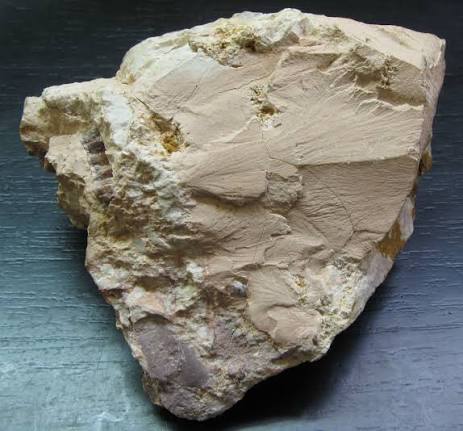
Nacrite is a relatively rare clay mineral in the kaolinite subgroup, with the chemical formula Al₂Si₂O₅(OH)₄. It is an aluminum silicate hydroxide belonging to the phyllosilicate class, a group of minerals characterized by sheet-like structural arrangements. Nacrite has the same chemical composition as kaolinite, dickite, and halloysite, but differs in the arrangement and stacking sequence of its structural layers. These differences define it as a distinct mineral species rather than simply a compositional variety of kaolinite. Nacrite typically occurs in white, gray, yellowish, or brownish forms and commonly exhibits a pearly luster on its cleavage surfaces. It is most frequently associated with hydrothermal mineral deposits and altered rocks, although it can also form under certain low-temperature conditions. Because its physical appearance can resemble other clay minerals, reliable identification generally requires mineralogical analysis, particularly X-ray diffraction.
History and Discovery of Nacrite
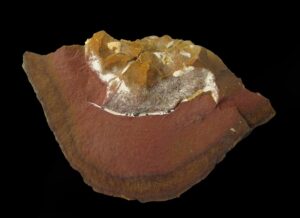
The name nacrite was introduced by the French mineralogist Alexandre Brongniart in 1807, deriving from the French word nacre, meaning mother-of-pearl, in reference to the mineral’s characteristic pearly luster. However, the original description did not provide sufficient information to establish the mineral’s identity with certainty. In 1832, the German mineralogist August Breithaupt described nacrite-like material collected from an ore vein near Freiberg in Saxony, Germany. During the nineteenth and early twentieth centuries, the name was applied inconsistently to several minerals with a pearly or micaceous appearance, making it difficult to distinguish true nacrite from other sheet silicates. Its status as a distinct mineral species was established more firmly in 1931, when Charles S. Ross and Paul F. Kerr used X-ray diffraction to investigate material from Brand near Freiberg and demonstrated that nacrite possessed a distinct crystal structure within the kaolin mineral group. This structural evidence helped clarify its relationship to kaolinite and dickite and provided a reliable basis for subsequent mineralogical studies.
Classification and Crystal Structure of Nacrite
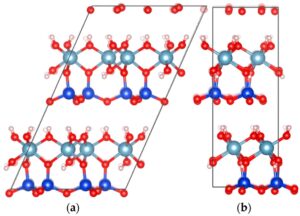
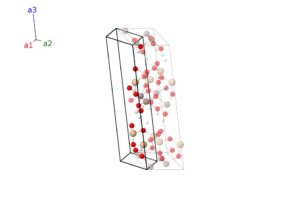
Nacrite is classified as a phyllosilicate mineral within the kaolinite subgroup of the kaolinite-serpentine group. Its chemical formula, Al₂Si₂O₅(OH)₄, indicates that it consists of aluminum, silicon, oxygen, and hydroxyl groups. Nacrite crystallizes in the monoclinic crystal system, and its structure is characterized by the regular arrangement of tetrahedral and octahedral sheets. The tetrahedral sheet consists primarily of silicon atoms coordinated with oxygen, while the octahedral sheet contains aluminum atoms coordinated with oxygen and hydroxyl groups. These two sheets combine to form a fundamental 1:1 structural layer, a configuration shared by the principal minerals of the kaolinite group. The layers are stacked in a specific sequence, and differences in this stacking arrangement distinguish nacrite from other minerals with the same chemical composition.
The most important structural distinction between nacrite, kaolinite, and dickite lies in the way their layers are stacked and the distribution of vacant sites within their octahedral sheets. Although these minerals have identical ideal chemical formulas, their different atomic arrangements produce distinct crystal structures and diffraction patterns. Nacrite is generally described as a relatively ordered, monoclinic member of the kaolinite group, and its structure has been investigated using X-ray diffraction and other crystallographic techniques. Halloysite is also chemically related, but it commonly develops a tubular morphology and may contain interlayer water, unlike the typical platy structure of nacrite. Because these minerals cannot be reliably distinguished by chemical composition alone, structural analysis is essential for confirming the presence of nacrite in natural specimens.
Physical Properties of Nacrite
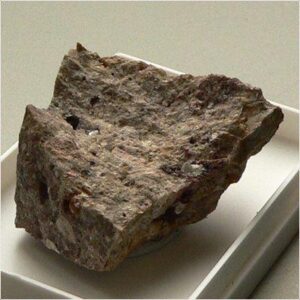
Nacrite typically occurs in white, off-white, gray, pale yellow, and brownish colors, although its appearance may vary according to impurities, associated minerals, and the conditions under which it forms. It commonly exhibits a pearly luster on cleavage surfaces, while other surfaces may appear dull or earthy, particularly in fine-grained or massive aggregates. Its crystals are generally small and may occur as platy particles, compact aggregates, or fine-grained masses rather than as large, well-developed individual crystals. Like other minerals in the kaolinite subgroup, nacrite has a relatively low hardness and a characteristic sheet silicate structure that influences its cleavage and physical behavior. Its appearance can overlap considerably with that of kaolinite and dickite, so color and luster alone are insufficient for reliable identification.
Nacrite has a Mohs hardness of approximately 2–2.5, making it a relatively soft mineral that can be scratched easily by harder materials. Its streak is white, and its specific gravity generally falls within the range of approximately 2.5–2.7. The mineral has perfect cleavage parallel to the basal plane of its sheet-like structure, allowing it to separate along relatively weakly bonded layers. Its tenacity is described as flexible but inelastic, meaning that thin fragments may bend slightly but do not retain the deformation after the applied force is removed. Nacrite is typically transparent to nearly transparent in thin fragments, although massive or fine-grained specimens may appear translucent or opaque. These properties are consistent with its layered crystal structure and help distinguish its physical behavior from that of harder silicate minerals.
Chemical Composition and Properties of Nacrite
Nacrite has the ideal chemical formula Al₂Si₂O₅(OH)₄, indicating that it contains aluminum, silicon, oxygen, and hydroxyl groups. Its composition can also be expressed in terms of its principal oxide components as Al₂O₃, SiO₂, and H₂O, with theoretical proportions of approximately 39.5% aluminum oxide, 46.5% silicon dioxide, and 14.0% water by mass. The hydroxyl groups are incorporated into the crystal structure rather than occurring solely as free or adsorbed water. This distinction is important when examining the mineral’s behavior during heating and its transformation into other aluminosilicate materials. Nacrite has the same ideal chemical composition as kaolinite, dickite, and halloysite, so its identification depends primarily on structural differences rather than on the presence of unique chemical elements.
The chemical behavior of nacrite is closely related to its layered structure and its formation under hydrothermal conditions. It is generally stable under ordinary surface conditions, but heating can cause dehydroxylation, a process in which hydroxyl groups are removed from the structure as water vapor and the original crystalline arrangement breaks down. With sufficient heating, nacrite can transform into a less ordered aluminosilicate phase commonly described as metanacrite before further thermal reactions occur at higher temperatures. Its stability also differs from that of other kaolin-group minerals. Thermodynamic research indicates that kaolinite is generally the more stable phase under comparable conditions, while nacrite and dickite may form as metastable phases depending on temperature, fluid chemistry, and the kinetics of crystallization. These relationships help explain why nacrite is less commonly encountered than kaolinite in many geological environments.
Formation and Geological Occurrence of Nacrite
Nacrite is most commonly associated with hydrothermal mineralization and alteration, particularly in geological environments where mineral-bearing fluids interact with pre-existing rocks. It can form when hot, chemically active fluids circulate through fractures, veins, cavities, and other permeable zones, depositing aluminum-rich silicate minerals as temperature, pressure, fluid composition, or chemical conditions change. Nacrite is generally less common than kaolinite and is frequently found in association with other clay minerals, especially dickite and kaolinite, as well as quartz and mica. Its formation depends on several interacting factors, including the availability of aluminum and silicon, the chemistry of the circulating fluids, and the conditions under which the mineral crystallizes. Although nacrite has traditionally been associated with relatively high-temperature hydrothermal environments, documented occurrences show that it can also develop at lower temperatures under suitable chemical conditions. Consequently, its presence alone cannot be used as a reliable indicator of a specific formation temperature.
In hydrothermal ore deposits, nacrite may occur as cavity-filling material, thin coatings along fractures, or small crystals within quartz veins and altered rocks. Its formation can be associated with metallic mineralization, including deposits containing gold, copper, lead, and zinc, although the precise relationship varies between localities. In the Chinkushih mining district of northern Taiwan, for example, nacrite has been identified in cavities associated with a gold-enargite deposit, where it occurs alongside dickite. At Shap in Cumbria, England, nacrite was reported in quartz veins and along fractures in rocks affected by hydrothermal activity associated with the Shap granite. These occurrences illustrate how nacrite can develop in different geological settings while remaining closely linked to fluid movement, rock alteration, and localized mineral deposition.

Nacrite can also form through authigenic processes, in which a mineral crystallizes directly within an existing sediment or rock rather than being transported there from another location. Research has documented nacrite forming through precipitation from pore solutions in carbonaceous shale under ambient-temperature conditions, suggesting that evaporation and changes in solution chemistry can sometimes promote its development without a high-temperature hydrothermal system. Such findings demonstrate that the formation of nacrite is controlled not only by temperature but also by the chemical composition and concentration of the fluids involved, as well as the kinetics of mineral crystallization. These variations are important when interpreting nacrite-bearing rocks because similar mineral assemblages may originate through different geological processes.
Major Localities of Nacrite
Nacrite has been documented at mineral localities in Europe, North America, Asia, and other regions, although confirmed occurrences are relatively uncommon compared with those of kaolinite. Its distribution is closely associated with hydrothermal veins, altered igneous rocks, fractures, and certain ore deposits. Many reported specimens occur as fine-grained aggregates or small crystals, and some localities are known primarily through mineralogical studies rather than through the production of collectible specimens. The identification of nacrite at a particular locality may require confirmation by X-ray diffraction because other kaolin-group minerals can occur under similar geological conditions.
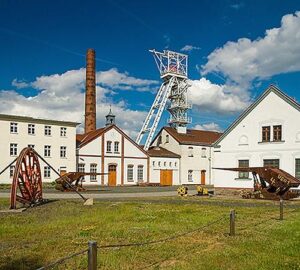
Germany is historically important in the study of nacrite. The type locality is the Einigkeit Mine near Brand-Erbisdorf in Saxony, within the broader Freiberg mining district. Material from this region played a central role in establishing nacrite as a distinct mineral species through crystallographic investigations. Additional German occurrences have been recorded in several mining districts and quarries, including localities in the Harz Mountains and Baden-Württemberg. These deposits provide examples of nacrite associated with mineralized veins and altered rocks, reflecting the region’s complex history of hydrothermal activity and ore formation.
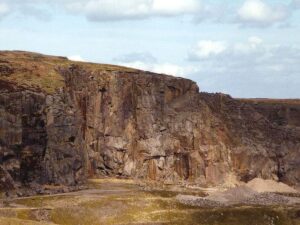
In the United Kingdom, nacrite has been reported from Shap Blue Quarry in Cumbria, England, where it occurs in quartz veins and along fractures within rocks affected by hydrothermal alteration associated with the Shap granite. It has been found with minerals including chlorite, hematite, pyrite, quartz, calcite, and baryte. This occurrence is particularly useful for understanding the relationship between nacrite formation and fluid movement through fractured and metamorphosed volcanic rocks. Other British localities have also been recorded, although the geological setting and reliability of individual reports vary.
In North America, nacrite has been documented at St. Peter’s Dome in the Pikes Peak region of Colorado, United States. At this locality, it occurs as an alteration product of microcline in veins associated with pegmatitic rocks. The mineral assemblage includes fluorite, cryolite, columbite, zircon, astrophyllite, and mica, illustrating its occurrence in a chemically distinctive geological environment. Additional records from the United States and Canada include localities associated with mines, quarries, and hydrothermal mineralization. However, individual occurrences should be evaluated according to the available analytical evidence rather than assumed to represent equally well-characterized deposits.
In Asia, northern Taiwan is an important locality for nacrite research. The Chinkushih mining district, near the northern coast of Taiwan, contains nacrite and dickite associated with a gold-enargite deposit, where the minerals occur as clay filling cavities in mineralized rock. Studies using X-ray diffraction, thermal analysis, and scanning electron microscopy have helped characterize their crystal structures and habits. Nacrite has also been recorded at other localities around the world, including Finland and several European mining districts, demonstrating that its formation is not restricted to a single type of deposit. Taken together, these occurrences show that nacrite is a geographically widespread but relatively uncommon mineral whose distribution reflects a range of geological and chemical conditions.
Uses and Applications of Nacrite
Nacrite has limited direct industrial applications compared with more abundant clay minerals, particularly kaolinite. Its principal importance lies in mineralogical research, geological interpretation, and the study of clay mineral formation. Although nacrite shares the same ideal chemical composition as kaolinite and dickite, differences in crystal structure and layer stacking influence its stability, formation conditions, and identification. These characteristics make nacrite useful for investigating the relationships between mineral structure, chemical composition, and geological processes. Its relative rarity and the need for careful structural identification limit its use as a large-scale industrial raw material.
In geological research, nacrite can provide information about fluid circulation, hydrothermal alteration, and the chemical conditions under which clay minerals crystallize. Its occurrence in mineralized veins, altered rocks, and ore deposits can help researchers examine the interactions between geological fluids and surrounding materials. However, nacrite should not be treated as an unambiguous indicator of high formation temperatures because it has also been documented forming under ambient-temperature conditions through precipitation from pore solutions. Interpreting its geological significance therefore requires consideration of the surrounding mineral assemblage, rock type, and independent evidence of the conditions under which it formed.
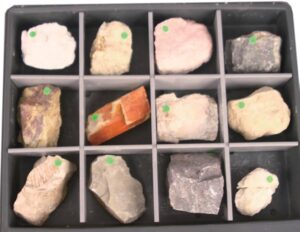
Nacrite is also relevant to crystallographic and materials research. X-ray diffraction, infrared spectroscopy, Raman spectroscopy, and thermal analysis can be used to investigate its structure and distinguish it from other minerals in the kaolinite subgroup. These techniques help researchers examine the ordering of structural layers, the behavior of hydroxyl groups during heating, and the transformations that occur under changing temperature and pressure conditions. Such investigations contribute to a broader understanding of layered aluminosilicates and their behavior in geological environments. Nacrite may also be encountered in mineral collections, particularly when specimens come from well-documented localities, although its fine-grained occurrence means that visually distinctive display specimens are less common than those of many other collectible minerals.
How to Identify Nacrite
Nacrite can be identified through a combination of physical characteristics, geological occurrence, and mineralogical testing. Typical specimens are white, gray, pale yellow, or brownish, with a pearly luster that is particularly noticeable on cleavage surfaces. The mineral is relatively soft, with a Mohs hardness of approximately 2–2.5, and has perfect basal cleavage associated with its layered crystal structure. It commonly occurs as platy crystals, fine-grained aggregates, or compact clay-like masses in hydrothermal veins and altered rocks. However, these characteristics are not unique to nacrite. Kaolinite and dickite share the same ideal chemical formula and have similar physical properties, so visual inspection alone generally cannot establish a definitive identification.
X-ray powder diffraction (XRD) is one of the most important methods for distinguishing nacrite from other minerals in the kaolinite subgroup. Although nacrite, kaolinite, and dickite have identical ideal chemical compositions, their different layer-stacking sequences produce distinct diffraction patterns. Nacrite exhibits characteristic reflections that can be compared with reference data to determine its crystal structure. Infrared spectroscopy and thermal analysis can provide additional evidence, particularly when samples contain mixtures of different clay minerals. Electron diffraction techniques can also help distinguish nacrite from kaolinite and dickite by examining the crystallographic symmetry of individual grains. These methods are especially valuable because natural clay specimens may contain several closely related mineral phases in the same sample.
When examining a suspected nacrite specimen, its geological setting can provide useful supporting evidence. Occurrences in hydrothermal veins, altered igneous rocks, and mineralized cavities are consistent with documented environments in which nacrite forms. Nevertheless, geological association should be treated as supporting information rather than conclusive proof, since other clay minerals can develop under similar conditions. A reliable identification therefore combines observations of color, luster, hardness, and habit with structural analysis, especially X-ray diffraction. This approach helps distinguish confirmed nacrite from specimens that may have been incorrectly identified as kaolinite or dickite in older mineralogical records.
Nacrite and Similar Minerals
Nacrite belongs to the kaolinite subgroup and can be difficult to distinguish from other clay minerals because several members share the same ideal chemical composition and similar physical characteristics. Kaolinite, dickite, and nacrite all have the chemical formula Al₂Si₂O₅(OH)₄, but their structural layers differ in stacking sequence and crystallographic arrangement. Halloysite is also closely related chemically, although it commonly develops a tubular morphology and may contain interlayer water in its hydrated form. These differences affect their diffraction patterns, crystal habits, and behavior during heating. Since color, hardness, and general appearance overlap considerably, reliable identification usually depends on structural analysis rather than visual comparison alone.
| Mineral | Chemical formula | Crystal structure or habit | Main distinguishing feature |
|---|---|---|---|
| Nacrite | Al₂Si₂O₅(OH)₄ | Monoclinic; platy crystals and aggregates | Distinct layer-stacking arrangement; commonly associated with hydrothermal environments |
| Kaolinite | Al₂Si₂O₅(OH)₄ | Triclinic; commonly occurs as fine plates | Widespread in weathering products and clay-rich rocks |
| Dickite | Al₂Si₂O₅(OH)₄ | Monoclinic; platy crystals and aggregates | Different layer-stacking arrangement from nacrite |
| Halloysite | Al₂Si₂O₅(OH)₄·nH₂O | Commonly tubular or rolled; may also occur in other forms | Hydrated forms contain interlayer water and have a structure that differs from the planar kaolin minerals |
The most reliable distinction between nacrite and these related minerals is their crystal structure. Kaolinite is commonly associated with weathering and soil formation, while nacrite and dickite are frequently documented in hydrothermal settings. Halloysite differs in its tendency to develop curved or tubular layers, particularly in its hydrated form. These associations are useful clues but are not absolute rules, because formation conditions overlap and individual specimens may contain mixtures of several clay minerals. For accurate identification, X-ray diffraction remains a key analytical method, with spectroscopic and microscopic techniques providing additional information when necessary.