Names
Ferropericlase
Intro
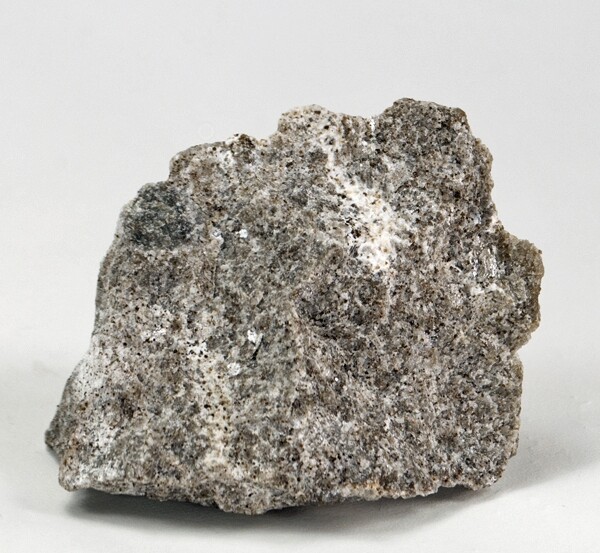
Ferropericlase (or magnesiowüstite) is an iron-bearing variety or species of periclase, represented by the chemical formula (Mg,Fe)O. It is interpreted as one of the primary mineral components of the Earth's lower mantle alongside silicate perovskite, frequently occurring as micro-inclusions in deep mantle diamonds.
View article
Basic Information Show Hide
Mineral ID
10086
Common Synonyms / Aliases
Magnesiowüstite, Ferroan Periclase
Chemistry Show Hide
Chemical Formula
(Mg,Fe)O
Elements
Mg, Fe, O
Minor Elements / Impurities
Ni, Cr, Mn, Ca, Ti
Empirical Formula
(Mg0.8Fe0.2)O
Molecular Weight (g/mol)
46.53
Solubility
Insoluble in water; soluble in hot hydrochloric acid (HCl).
Reaction to Acid
Slowly dissolves in warm concentrated hydrochloric acid.
Classification Show Hide
Mineral Type
Mineral Variety
IMA Status
Grandfathered
IMA Symbol
Fpc
Strunz Classification
04.AB.25
Dana Classification
04.01.01.02
Mineral Group
Periclase Group (Oxides)
Crystal Structure Show Hide
Crystal System
Isometric (Cubic)
Crystal Habit
Grains, rounded inclusion blebs, octahedral crystals, compact massive.
Crystal Class
Hexoctahedral (4/m 3 2/m)
Space Group
Fm3m
Cell Parameter A (Angstrom)
4.21
Cell Parameter B (Angstrom)
4.21
Cell Parameter C (Angstrom)
4.21
Cell Angle Alpha (Degrees)
90
Cell Angle Beta (Degrees)
90
Cell Angle Gamma (Degrees)
90
Unit Cell Z
4
Crystal Twinning
Spinel law {111} (rare)
Common Crystal Faces
{100}, {110}, {111}
Physical Properties Show Hide
Primary Color
Brown
Common Colors
Brown Black
Streak
Brownish white to pale brownish gray
Luster
Vitreous to sub-metallic
Transparency / Diaphaneity
Translucent to opaque
Hardness (Mohs)
5.5 - 6.0
Cleavage
Perfect
Cleavage Direction
{100}
Cleavage Angle / Parting Quality
Perfect cubic cleavage on {100}; parting on {111}.
Fracture
Conchoidal to uneven
Tenacity
Brittle
Specific Gravity
3.60 - 4.50
Magnetism
Slightly magnetic to non-magnetic (paramagnetic at room temperature)
Melting Point
2800
Thermal Stability
Stable under high-pressure and high-temperature lower mantle conditions (decomposes/alters under atmospheric oxidation at extreme temperatures).
Optical Properties Show Hide
Refractive Index
1.735 - 1.780
Birefringence
0.000
Dispersion
None
Optical Character
Isotropic
Pleochroism
Non Pleochroic
Pleochroism Details
Not reported
Optical Phenomena
Not reported
Fluorescence
Non-fluorescent
Luminescence / Phosphorescence / Thermoluminescence
None
Absorption Spectrum
Not reported
Occurrence and Formation Show Hide
Formation Process
Formed under ultra-high pressure and high temperature conditions in the lower mantle during planetary differentiation; captured as protogenetic or syngenetic inclusions during deep diamond crystallization.
Geological Environment
Lower mantle rock assemblies (peridotitic and eclogitic mantle environments), ultra-deep subducted lithospheric mantle, and xenolith inclusions in kimberlites.
Associated Minerals
Diamond, Bridgmanite, Breyite, Davemaoite, Ferro-magnesite, Olivine
Type Locality
Juína diamond field, Mato Grosso, Brazil (as super-deep diamond inclusion)
Major Producing Countries / Localities
BrazilCanadaRussiaSouth AfricaUnited States
Economic Deposit Type
Diamondiferous kimberlites and lamproites
History and Naming Show Hide
Discovery Year
1960
Name Origin
Named for its chemical composition containing iron (ferro-) and its structural/compositional relationship to periclase.
Type Specimen Repository
Natural History Museum / University collections
Safety and Related Information Show Hide
Wearability
Poor
Health Hazards
None under normal handling conditions.
Handling Precautions
Handle with care as small inclusion specimens are fragile.
Varieties
Magnesiowüstite
Polytypes
None reported
Related Minerals
Periclase, Wüstite, Bunsenite, Manganosite
Commercial and Gemology Show Hide
Common Treatments
None
Enhancements
None
Common Cuts
None (Scientific specimen only)
Rarity / Market Grade
Extremely Rare (at Earth's surface; abundant in deep mantle)