
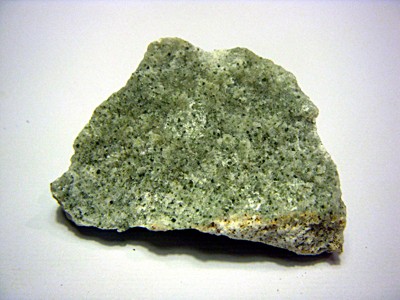
Ferropericlase is a magnesium–iron oxide mineral with a composition generally represented by (Mg,Fe)O. It belongs to the periclase group and forms a solid-solution series between magnesium-rich periclase, MgO, and iron-rich wüstite, FeO. In its structure, Fe²⁺ substitutes for Mg²⁺ at equivalent divalent cation sites, allowing the composition to vary according to the relative proportions of magnesium and iron. The name ferropericlase is generally used for iron-bearing members of this system, particularly compositions in which magnesium remains a major component.
Ferropericlase crystallizes in the cubic crystal system and has the same basic structure as periclase. Its composition and physical properties can change substantially with increasing iron content. Because Mg²⁺ and Fe²⁺ have different ionic radii, iron substitution affects parameters such as unit-cell dimensions, density, optical properties, and elastic behavior. The mineral is typically dark gray, brownish, greenish gray, or nearly black, although its appearance can vary with composition, grain size, inclusions, and alteration.
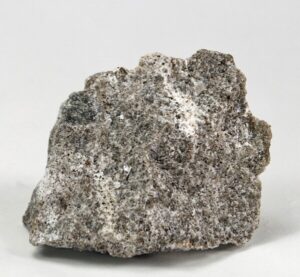
Natural ferropericlase is associated mainly with high-pressure geological environments. It has been identified in certain metamorphic rocks formed under extreme pressure conditions and as inclusions in diamonds that originated at considerable depths within the Earth. Ferropericlase is also recognized as a mineral phase that can occur under the pressure and temperature conditions of the lower mantle. Its occurrence in these settings reflects the stability of Mg–Fe oxides under conditions substantially different from those at Earth’s surface.
The composition of ferropericlase is not necessarily fixed at a single Mg:Fe ratio. Instead, magnesium and iron can substitute for one another over a range of compositions, and the exact chemical composition depends on the geological environment in which the mineral formed. In natural samples, minor elements may also occur through additional substitutions. For this reason, ferropericlase is best described using its chemical composition together with its structural characteristics rather than by color alone.
History and Discovery of Ferropericlase
Ferropericlase is not generally treated as a mineral species with a single fixed composition in the same way as periclase or wüstite. The name refers to Fe-bearing material within the MgO–FeO solid-solution system. The relationship between magnesium-rich periclase and iron-rich wüstite has long been recognized through experimental studies of the Mg–Fe–O system, while naturally occurring ferropericlase has subsequently been identified in high-pressure geological materials.
The mineralogical distinction is based primarily on chemical composition and crystal structure rather than on color or external appearance. Periclase has the ideal composition MgO, whereas wüstite has the ideal composition FeO. Between these end members, Mg²⁺ and Fe²⁺ can substitute for one another in the same structural position. Ferropericlase therefore represents an Fe-bearing, Mg-dominant composition within this broader oxide system.Natural ferropericlase has been reported from several high-pressure settings. One of the better-known occurrences is as mineral inclusions in diamonds, where the inclusion assemblage can preserve minerals that formed or equilibrated at depths within the Earth’s mantle. Ferropericlase has also been identified in high-pressure metamorphic materials and other geological environments where the pressure and temperature conditions permit the stability of Mg–Fe oxides.
The composition of ferropericlase can provide information about the conditions under which an individual sample formed or subsequently equilibrated. The relative proportions of magnesium and iron are affected by temperature, pressure, oxygen fugacity, and the composition of the surrounding mineral assemblage. As a result, chemical analysis is normally required to characterize ferropericlase accurately, particularly when distinguishing it from compositionally related members of the periclase–wüstite system.
Formation and Geological Occurrence of Ferropericlase
Ferropericlase forms under conditions where magnesium and iron occur together in an oxide-rich system and the pressure–temperature conditions favor the stability of the cubic Mg–Fe oxide structure. Its composition is controlled by the proportions of Mg and Fe available during formation, as well as by temperature, pressure, and oxygen fugacity. Under reducing conditions, iron is commonly present predominantly as Fe²⁺, allowing it to substitute directly for Mg²⁺ in the periclase structure. Changes in oxygen fugacity can modify the proportion of iron present as Fe²⁺ or Fe³⁺ and can therefore influence the stability and composition of the oxide assemblage.
In high-pressure metamorphic environments, ferropericlase can develop through reactions involving Mg-rich silicate minerals and iron-bearing phases. At sufficiently high pressures, minerals stable at shallower levels of the crust and upper mantle can transform into assemblages containing ferropericlase. Its presence therefore depends not only on bulk-rock composition but also on the pressure–temperature path experienced by the rock. Grain size may range from microscopic crystals to inclusions enclosed within other minerals, depending on the geological setting.
Ferropericlase is also known from diamonds that formed at substantial depths within the Earth. When ferropericlase occurs as an inclusion enclosed by diamond, the surrounding diamond can protect the inclusion from later alteration during its transport toward the surface. Such inclusions may preserve chemical and structural information about the high-pressure environment in which they formed or equilibrated. In these samples, ferropericlase commonly occurs together with other minerals characteristic of deep mantle assemblages.
The mineral can also occur in experimentally produced high-pressure assemblages, where controlled pressure, temperature, and oxygen fugacity conditions are used to investigate the MgO–FeO system. Experimental studies show that the composition and physical properties of ferropericlase change with pressure, temperature, and iron content. These relationships are useful when interpreting natural samples, particularly those from high-pressure rocks and deep-origin mineral inclusions.
Crystal Structure of Ferropericlase
Ferropericlase has the cubic crystal structure characteristic of the periclase–wüstite system. Its structure is based on the rock-salt or NaCl-type arrangement, in which oxygen anions form a closely packed framework and divalent cations occupy octahedrally coordinated sites between them. Magnesium and iron are distributed over the same crystallographic cation site, so the structure can accommodate changes in Mg:Fe ratio without requiring a different basic structural framework.
The idealized structure can therefore be described as an array of Mg²⁺ and Fe²⁺ cations surrounded by six oxygen atoms. Each oxygen atom is likewise coordinated by six neighboring divalent cations. The substitution of Fe²⁺ for Mg²⁺ changes the average dimensions of the structure because Fe²⁺ has a larger ionic radius than Mg²⁺. As iron content increases, the unit-cell parameter and density generally increase, while other physical and elastic properties also change according to composition.
Pressure has a significant effect on the structural behavior of ferropericlase. At the pressures relevant to the Earth’s lower mantle, the Fe-bearing oxide remains in the cubic structure, but the electronic state of iron can change. In particular, Fe²⁺ may undergo a pressure-induced high-spin to low-spin transition. This change involves the arrangement of electrons in the iron ion rather than a change in the overall crystal symmetry, but it can affect the mineral’s volume, density, elasticity, and other physical properties.
The distribution and electronic behavior of iron in ferropericlase can also vary with temperature, pressure, and composition. These factors influence the relationship between the crystal lattice and the physical properties measured in natural or experimentally produced samples. Consequently, structural studies of ferropericlase commonly consider both its Mg–Fe composition and the pressure–temperature conditions under which the mineral formed or equilibrated.
Physical and Chemical Properties of Ferropericlase
Ferropericlase is typically described as a dark gray, brownish gray, greenish gray, or black mineral, although its appearance varies with iron content, grain size, impurities, and the condition of the specimen. Because natural ferropericlase commonly occurs as small grains or mineral inclusions, well-developed macroscopic crystals are uncommon. Its luster is generally vitreous to submetallic, and its transparency ranges from translucent to opaque depending on grain thickness and composition.
The chemical composition of ferropericlase can be expressed broadly as (Mg,Fe)O, with Mg²⁺ and Fe²⁺ occupying the principal divalent cation site. The relative amount of iron is variable rather than fixed, and this compositional variation produces a continuous change in several physical properties between magnesium-rich and iron-rich compositions. Minor elements may also occur through additional substitutions, particularly in natural samples formed under complex geological conditions.
The density of ferropericlase generally increases with increasing iron content because Fe²⁺ is heavier than Mg²⁺ and has a larger ionic radius. The unit-cell dimensions also tend to increase as Fe²⁺ replaces Mg²⁺. These relationships provide useful compositional indicators when ferropericlase is studied by X-ray diffraction or other analytical methods. However, pressure and temperature can also influence measured structural parameters, so composition should not be inferred from a single physical property without considering the geological conditions.
Ferropericlase has a high melting temperature and is stable over a broad range of pressure and temperature conditions. Its physical properties are strongly affected by pressure, particularly in the high-pressure environments where natural examples occur. Elastic properties, density, electrical behavior, and other measurable characteristics can change with both iron concentration and pressure. The behavior of Fe²⁺ under compression is particularly significant because changes in its electronic spin state can modify the physical properties of the mineral without changing its basic cubic crystal structure.From a chemical perspective, ferropericlase belongs to the MgO–FeO oxide system. Under sufficiently oxidizing conditions, some iron may occur in a higher oxidation state or ferropericlase may coexist with other iron oxides and silicate minerals. Consequently, the actual chemistry of a natural sample depends on its formation environment and subsequent geological history. Quantitative chemical analysis is therefore necessary for determining the Mg/Fe ratio and identifying minor elemental substitutions.
Types and Varieties of Ferropericlase
Ferropericlase does not have a widely established set of officially recognized varieties based on color or appearance. Instead, naturally occurring material is commonly distinguished by its chemical composition, particularly the relative proportions of magnesium and iron. Because Mg²⁺ and Fe²⁺ can substitute for one another within the same structural site, samples may show considerable compositional variation while retaining the same cubic crystal structure.
- Magnesium-rich ferropericlase: Fe²⁺ is present as a subordinate component, with magnesium remaining the dominant divalent cation. These compositions approach the periclase end member, MgO.
- Intermediate ferropericlase: Magnesium and iron occur in substantial proportions, producing compositions between periclase and wüstite. Physical properties such as density and unit-cell dimensions vary according to the Mg:Fe ratio.
- Iron-rich ferropericlase: Iron represents a larger proportion of the divalent cation content, and the composition approaches the FeO-rich side of the MgO–FeO system.
- Periclase–ferropericlase compositions: Samples close to the MgO end member may contain relatively small amounts of Fe²⁺. Their classification depends on the chemical composition determined by analysis rather than on visual appearance.
- Ferropericlase in high-pressure assemblages: Material occurring in deep-origin rocks or mineral inclusions can have compositions influenced by pressure, temperature, oxygen fugacity, and the surrounding mineral assemblage. These geological differences do not necessarily represent separate mineral varieties.
Color should not be used as the primary basis for distinguishing these compositional types. Chemical analysis is required to determine the relative amounts of magnesium and iron, while X-ray diffraction and other structural methods can be used to confirm the cubic structure and characterize changes associated with composition.
Where Is Ferropericlase Found?
Ferropericlase is mainly associated with high-pressure geological environments rather than ordinary surface rocks. Natural occurrences have been documented in deep-origin mineral assemblages, including ferropericlase preserved as inclusions within diamonds. In these settings, the mineral can remain enclosed within the host diamond during transport from depth toward the Earth’s surface, allowing its composition and crystal structure to be examined after the host rock reaches shallower conditions.
Ferropericlase is also associated with high-pressure metamorphic rocks in which Mg–Fe oxide phases become stable under elevated pressure and temperature. Its occurrence depends on the bulk chemical composition of the rock as well as the pressure, temperature, and oxygen fugacity conditions during mineral formation or subsequent equilibration. It may occur together with high-pressure silicate minerals, other oxides, and minerals containing magnesium and iron.
The mineral is particularly associated with deep mantle assemblages. Under conditions corresponding to the Earth’s lower mantle, ferropericlase can coexist with high-pressure magnesium–iron silicate phases. Its stability and composition may change with depth because increasing pressure affects the partitioning of iron and magnesium between coexisting minerals. Temperature and oxygen fugacity can also influence the Fe/Mg ratio and the oxidation state of iron within the assemblage.
Natural samples are commonly small and may occur as inclusions, fine-grained aggregates, or isolated grains within high-pressure rocks. For this reason, ferropericlase is often studied using microanalytical techniques rather than conventional hand-specimen examination. Electron-microprobe analysis can determine its Mg/Fe ratio, while X-ray diffraction, Raman spectroscopy, and other methods can provide information about its crystal structure and physical state.
How to Identify Ferropericlase
Ferropericlase can be difficult to identify from appearance alone because natural specimens are commonly fine-grained, dark-colored, or enclosed within other minerals. Its composition also overlaps with other Mg–Fe oxide phases, particularly periclase and wüstite. A reliable identification therefore requires information about both chemical composition and crystal structure rather than relying only on color, luster, or grain morphology.
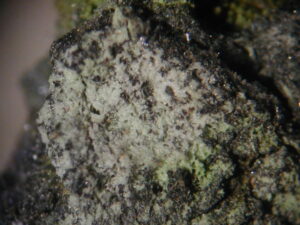
Chemical analysis is one of the primary methods used to characterize ferropericlase. Electron-microprobe analysis can determine the concentrations of magnesium and iron and establish the Mg/Fe ratio of an individual grain. Additional elements can also be measured to identify minor substitutions. Because the Fe/Mg ratio can vary considerably, quantitative analysis is particularly useful for distinguishing ferropericlase from compositions closer to the periclase or wüstite end members.
X-ray diffraction can be used to confirm the characteristic cubic structure of the mineral. The substitution of Fe²⁺ for Mg²⁺ affects the dimensions of the unit cell, so measured lattice parameters can provide additional information about composition. However, structural parameters are also influenced by pressure, temperature, and the physical state of the sample, particularly when material formed under high-pressure conditions is examined after recovery.Raman spectroscopy and other spectroscopic methods may provide additional information about the mineral’s structural and chemical state, especially when the available grains are very small. For ferropericlase preserved as an inclusion in diamond or another host mineral, non-destructive analytical methods can be particularly useful because the inclusion may be only a few micrometers across.
The main minerals and phases that may need to be distinguished from ferropericlase include periclase and wüstite. Periclase represents the MgO-rich end member, while wüstite represents the FeO-rich end of the Mg–Fe oxide system. Because these phases share closely related structures and compositions, the distinction cannot always be made reliably from visual characteristics. Chemical composition, crystallographic data, and the geological setting should therefore be considered together when identifying a natural sample.
Applications and Uses of Ferropericlase
Ferropericlase has no established use as an industrial raw material, gemstone, or ornamental mineral. Natural material is generally encountered as small grains, mineral inclusions, or components of high-pressure mineral assemblages rather than as material extracted for commercial applications. Its variable composition and typical geological occurrence limit its use as a conventional mineral commodity.
The main applications of ferropericlase are related to mineralogical and experimental research. Natural samples can be analyzed to investigate the chemical relationships between magnesium and iron in oxide minerals and to determine how these elements are distributed among coexisting high-pressure phases. Compositional data from ferropericlase can also be combined with information from associated minerals to study the pressure, temperature, and oxygen conditions of mineral formation.
Ferropericlase is also studied experimentally because its properties change under compression. Research commonly examines the effects of pressure and temperature on its crystal structure, density, elasticity, and the electronic state of iron. The pressure-induced change between high-spin and low-spin states of Fe²⁺ is an important part of its behavior under deep-Earth conditions and can influence several measurable physical properties.
In studies of diamonds and other deep-origin materials, ferropericlase inclusions can provide information about the conditions experienced by the host mineral at depth. Because individual inclusions may be extremely small, analytical techniques such as electron microscopy, electron-microprobe analysis, X-ray diffraction, Raman spectroscopy, and other spectroscopic methods are commonly used rather than conventional specimen-based examination.